
Are your cold cuts and processed meats contaminated with Listeria and Salmonella?
A chemical-free solution
UV-C technology that reduces the pathogen load in the packing room and directly on the product — doubling shelf life without adding anything to the meat.
shelf life
Why do cold cuts and processed meats become contaminated?
It is not a lack of hygiene. It is a condition of the process: meat is a perfect substrate, and recontamination happens after heat treatment, always at the same points.
Meat is the ideal substrate
High water activity, pH and nutrients: the perfect environment for Listeria and Salmonella to multiply. It is a characteristic of the product, not a defect.
Areas with moulds and bacteria
Heat reduces the microbial load, but the air, surfaces and handling in the packing room deposit pathogens back onto the product.
Biofilms anchored in the plant
Listeria forms biofilms in drains, belts and equipment — protected colonies that resist conventional cleaning and recontaminate batch after batch.
Cold slows it down, it does not eliminate it
Temperature control and nitrites slow growth, but they do not eliminate pathogens or destroy biofilms. They only postpone the symptom.
The critical point: the packing room and direct contact with the product
This is where the final microbial load is set before cold cuts and processed meats reach the customer. UV-C technology acts precisely at this stage — irradiating the air and the product surface, without touching the formulation or the cold chain.
Listeria monocytogenes
Survives refrigeration and forms persistent biofilms. A leading cause of recalls of ready-to-eat cold cuts and processed meats, which must meet the applicable FSSAI microbiological standards.
Salmonella
Cross-contamination from surfaces and handling. Survives in dry environments for long periods.
Clostridium perfringens
Forms heat-resistant spores that germinate during slow cooling of the cooked product.
Biofilms
A protective matrix on equipment and drains that shields bacteria from chemical disinfection.
What changes when you install UV-C in your plant
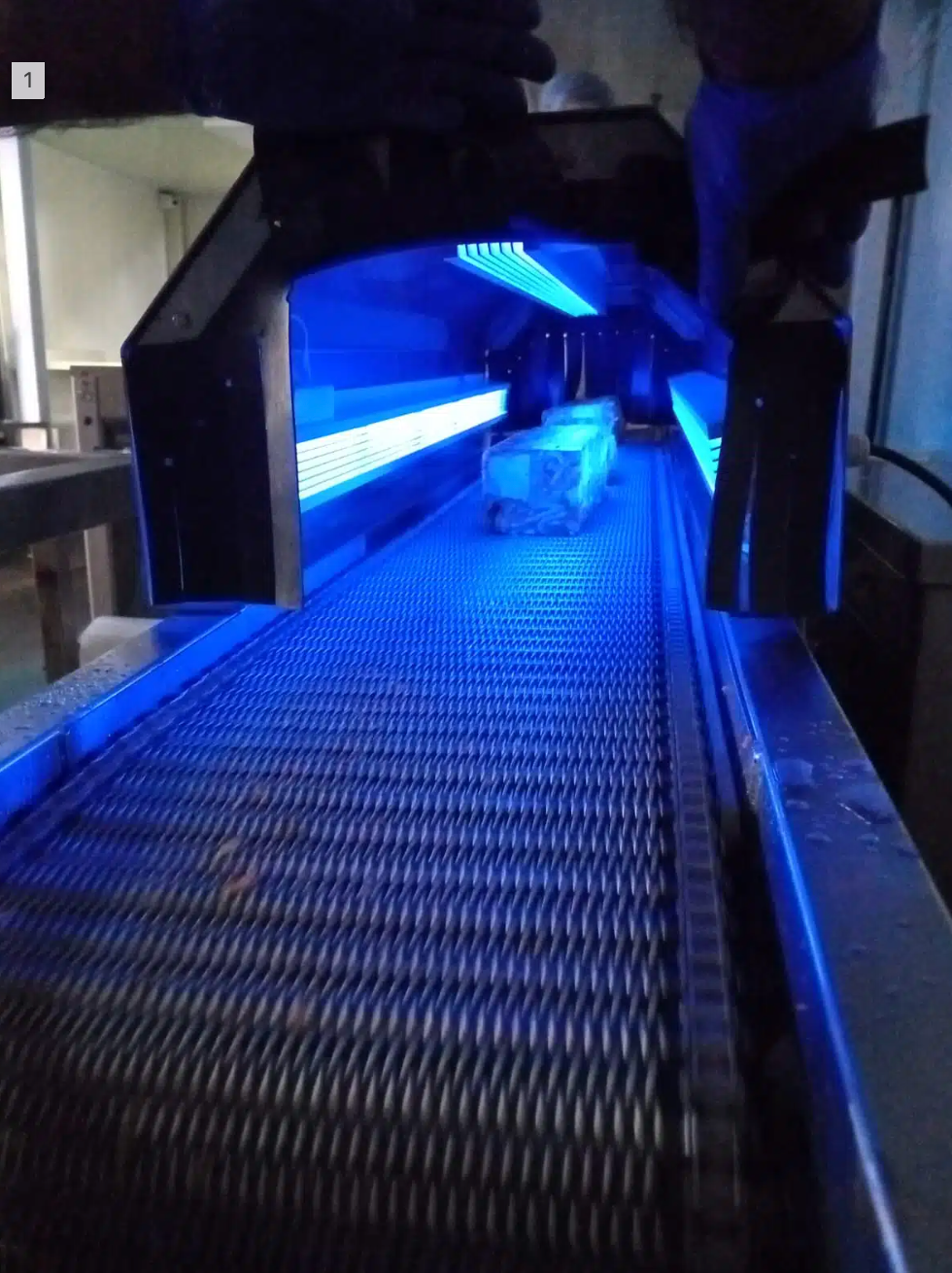
The UV-C units are installed in the packing room and over the conveyor belt. They reduce the pathogen load in the air and on the product surface.
Direct irradiation of the product: double the shelf life
Applying UV-C to the surface of the cold cut before packing reduces the initial load, and the product stays in perfect condition for up to twice as long.
THE DIFFERENTIATORPacking rooms without cross-contamination
The air and surfaces in the most critical area are disinfected continuously, cutting recontamination between batches.
Reduces Listeria, Salmonella and spores
UV-C light acts in seconds on surface pathogens, including Clostridium spores, without adding anything to the product.
Fewer preservatives, a cleaner label
Less reliance on nitrites and chemical preservatives — a differentiator increasingly valued by modern retail and export markets.
Wider distribution reach
Lower microbial load = longer safety window = greater reach without compromising the cold chain.
Don Pascual, a Chilean processed meat producer, doubled the shelf life of its products
A cold cuts and processed meat plant founded 25 years ago in Bulnes, southern-central Chile. It distributes across central Chile and produces 200 tonnes a month, with a focus on technological innovation and prevention.
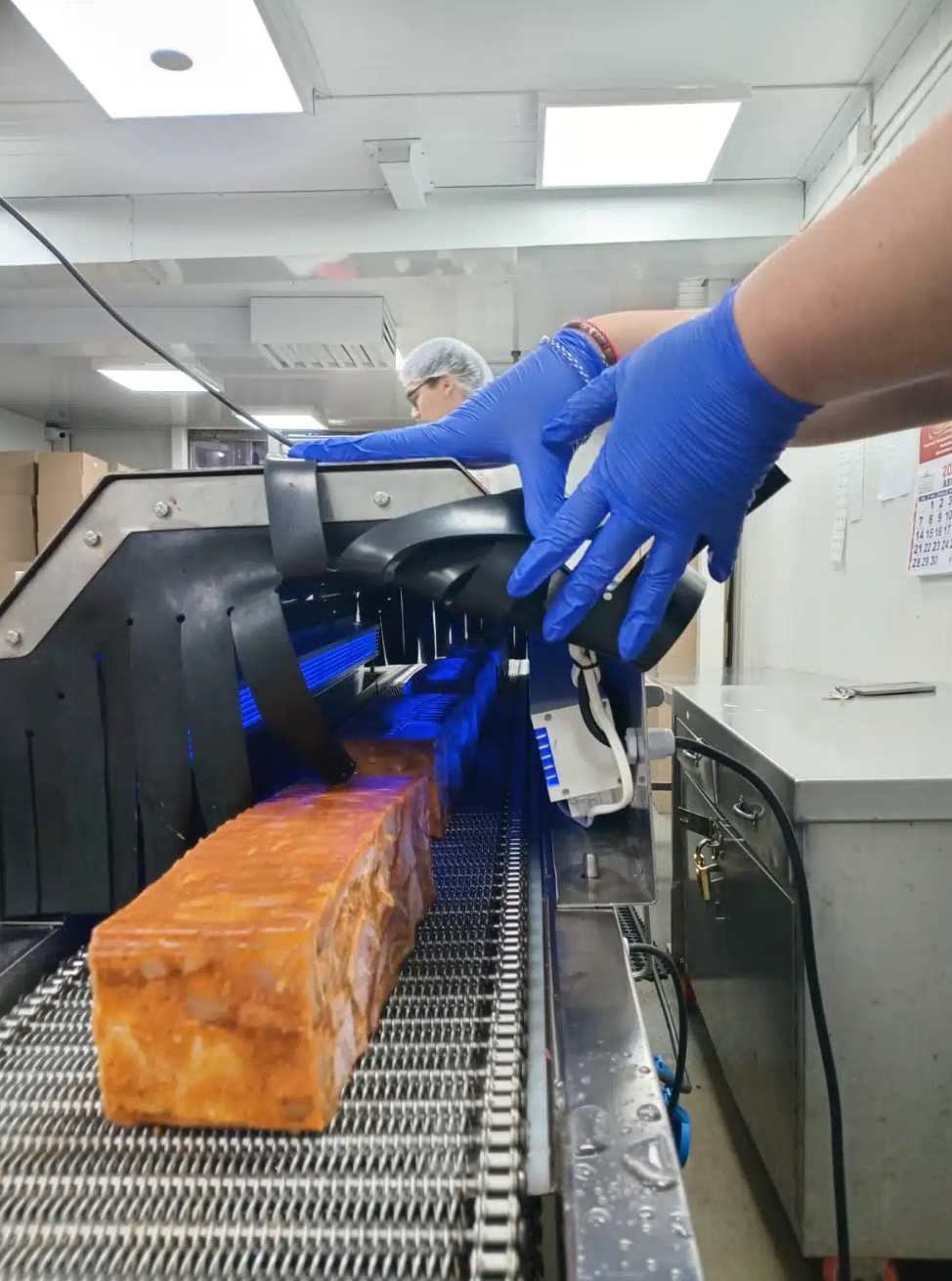
They wanted to safeguard food safety without relying only on preservatives. They implemented UV-Life on two fronts: irradiating the packing rooms to prevent cross-contamination and applying UV-C directly to the product.
"We irradiate the packing rooms to cut cross-contamination and we also apply UV-C directly to the product. The most important result was doubling the shelf life of our cold meats, while keeping their taste and colour."
25 years in business, 200 tonnes a month and a constant commitment to prevention technology. Watch the disinfection tunnel in operation:
UV-C light for your production line
FCC · CE · SGS · CESMEC certified equipment. Installed over existing conveyor belts and in existing packing rooms, without stopping production. We ship across India.
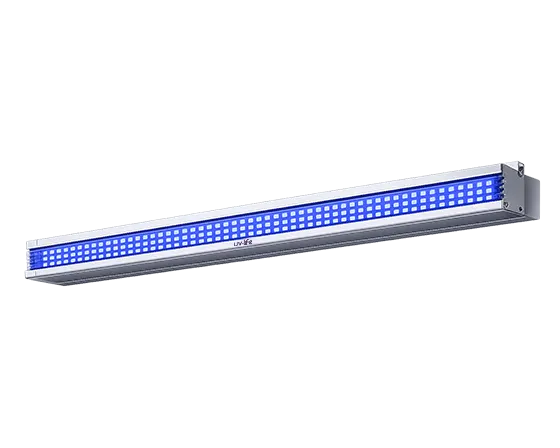
UV-C X50 Bar
High-power UV-C bar for installation over conveyor belts on lines for cold cuts, processed meats, poultry and other foods.
- UV-C 260–280 nm · Power 480 mW UV
- Ozone-free · No residues
- Service life 10,000 h (~2.7 years at 10 h/day)
- FCC · CE · SGS · CESMEC certified
- Dimensions 1200 × 60 × 50 mm
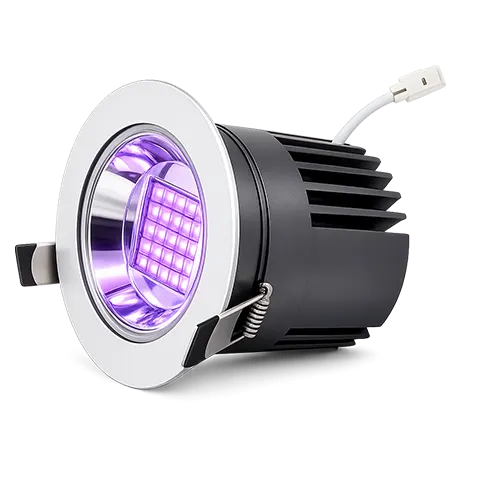
X36 UV-C LED Light
Recessed UV-C light for targeted disinfection of surfaces and process areas in packing rooms.
- UV-C 260–285 nm · Power 400 mW UV
- Ozone-free · No residues
- Service life 10,000 h (~2.7 years at 10 h/day)
- FCC · CE · SGS · CESMEC certified
- Diameter Ø89 mm
What owners and quality managers always ask
Do UV-C units need to be registered with FSSAI?
UV-C disinfection equipment is not a food and is not registered as a food product with FSSAI (Food Safety and Standards Authority of India). What is regulated is the food business: under the Food Safety and Standards Act, 2006, Schedule 4 of the FSS (Licensing and Registration of Food Businesses) Regulations, 2011 sets out the general hygienic and sanitary practices, including cleaning and sanitation of premises, equipment and surfaces, and food businesses are expected to apply a food safety management system based on HACCP principles, with its documents and records. Official control is carried out by FSSAI and State Food Safety Departments. UV-C fits in there as one more measure within the cleaning and sanitation programme, one of the prerequisite programmes for HACCP. Check the applicable FSSAI requirements for your category of food business.
What roles do FSSAI, State Food Safety Departments and other authorities play in UV-C disinfection?
FSSAI sets food safety standards and regulates food businesses at national level, and licensing, registration and inspection of businesses that manufacture, process, pack, store and distribute food are carried out by FSSAI and State Food Safety Departments, depending on the type and size of the business. Primary production falls under the Ministry of Agriculture & Farmers Welfare, and food exporters also work with APEDA. UV-C is not registered as a product: it is incorporated into the business’s cleaning and sanitation programme as a documented control measure, with its procedure and verification records. It does not replace the HACCP system; it adds measurable evidence to it.
Why is Listeria so hard to eliminate in a processed meat plant?
Because it survives refrigeration and forms biofilms in drains, belts and equipment that resist chemical cleaning, and ready-to-eat products must meet the applicable FSSAI microbiological standards. UV-C acts on the surfaces and air of the packing room, reducing the load before it recontaminates the product.
Does UV-C change the taste, colour or aroma of meat?
No. UV-C light acts on the surface in seconds without adding anything or generating heat. It does not alter organoleptic properties: the cold cut keeps its natural taste and colour.
Is it true that it doubles product shelf life?
Irradiating the product surface directly before packing reduces the initial microbial load, and this can double the time the cold cut stays in optimum condition. The result depends on each process, which is why we carry out a free preliminary assessment.
Does it replace nitrites and chemical preservatives?
UV-C acts on the process, not the formulation. It reduces surface microbial load before packing, which allows many clients to reduce their reliance on preservatives. The exact scope depends on each product.
Do I have to modify my entire production line?
No. The units are installed over the conveyor belt and in the existing packing rooms. A typical installation takes 1–2 days without stopping production.
Is it safe for workers?
Yes, when installed correctly. The units operate in areas designed to minimise direct exposure, and the installation takes staff safety into account.
Does it work both for the packing room and directly on the product?
Yes. The configuration is adjusted to irradiate the room air (preventing cross-contamination) and/or the product surface on the belt (extending shelf life), depending on your process.
Does your plant have Listeria problems or short shelf life?
Tell us about your process. Free technical assessment — no obligation, no sales pressure.
Prefer email? Write to sales@uv-life.com.