
Fighting Listeria and Salmonella in your deli meats and cold cuts?
Chemical-free UV-C
UV-C LED technology that cuts the pathogen load in the packaging room and on the product itself — doubling shelf life without adding anything to the meat.
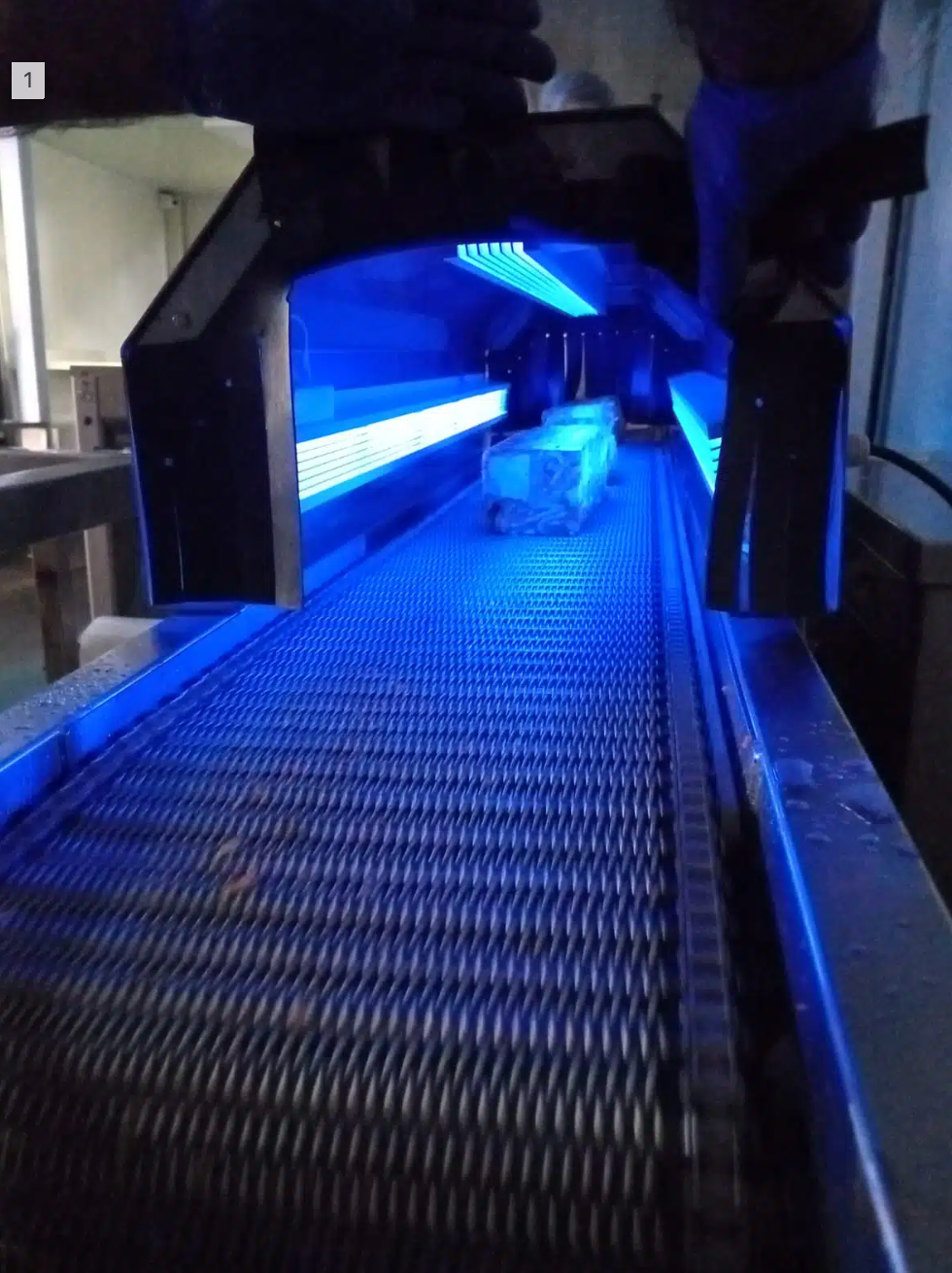
shelf life
Why do ready-to-eat meats and deli products get contaminated after cooking?
Ready-to-eat meats are recontaminated after the lethality step, not during it. Once product leaves the cook, packaging room air, food-contact surfaces, drains and handling put organisms back onto a post-lethality exposed surface that is rich in moisture, protein and nutrients. It is a condition of the process, not poor housekeeping.
Meat is the ideal growth substrate
High water activity, favorable pH and abundant nutrients: the perfect environment for Listeria and Salmonella to grow. That is a property of the product, not a defect.
Post-lethality exposure
Cooking knocks the microbial load down, but the air, the surfaces and the handling in further processing and packaging put pathogens right back on the product.
Biofilms anchored in the plant
Listeria builds biofilms in drains, belts and equipment — protected colonies that survive routine chemical cleaning and reseed the line batch after batch.
Cold slows it, it does not kill it
Temperature control and nitrites slow growth, but they do not eliminate pathogens or break up biofilms. They only postpone the symptom.
The critical point: the packaging room and direct contact with the product
That is where the final microbial load of your deli meats and cold cuts is set, right before they reach the customer. UV-C acts on exactly that stretch — treating the room air and the product surface, without touching the formulation or the cold chain.
Listeria monocytogenes
Survives refrigeration and builds persistent biofilms. The leading reason ready-to-eat deli meats get pulled from the market.
Salmonella
Cross-contamination from surfaces and handling. Survives dry environments for long periods.
Clostridium perfringens
Forms heat-resistant spores that germinate during slow cooling of cooked product.
Biofilms
A protective matrix on equipment and drains that shields bacteria from chemical sanitizers.
How does UV-C reduce Listeria in a meat processing plant?
UV-C LED fixtures are mounted in the packaging room and over the conveyor. The 260–285 nm light damages the DNA of Listeria, Salmonella and spores on the surfaces it reaches, lowering the environmental load and the product surface load in seconds — with no chemicals, no residue and no added heat.
Direct treatment of the product: double the shelf life
Applying UV-C to the surface of deli meat before packaging lowers the starting load, and the product holds in prime condition up to twice as long.
THE DIFFERENTIATORPackaging rooms without cross-contamination
The air and the surfaces of your most critical zone are treated continuously, cutting recontamination between production runs.
Knocks down Listeria, Salmonella and spores
UV-C acts in seconds on surface pathogens, including Clostridium spores, without adding anything to the product.
Fewer preservatives, cleaner label
Less dependence on nitrites and chemical preservatives — an advantage that retail buyers and export customers value more every year.
Wider distribution radius
Lower microbial load means a longer safe window, which means more reach without straining the cold chain.
Cecinas Don Pascual doubled the shelf life of its deli products
A deli meat producer founded 25 years ago in Bulnes, in Chile's Bío Bío region. It distributes across central Chile and produces 200 metric tons a month, with a strong focus on process technology and prevention.
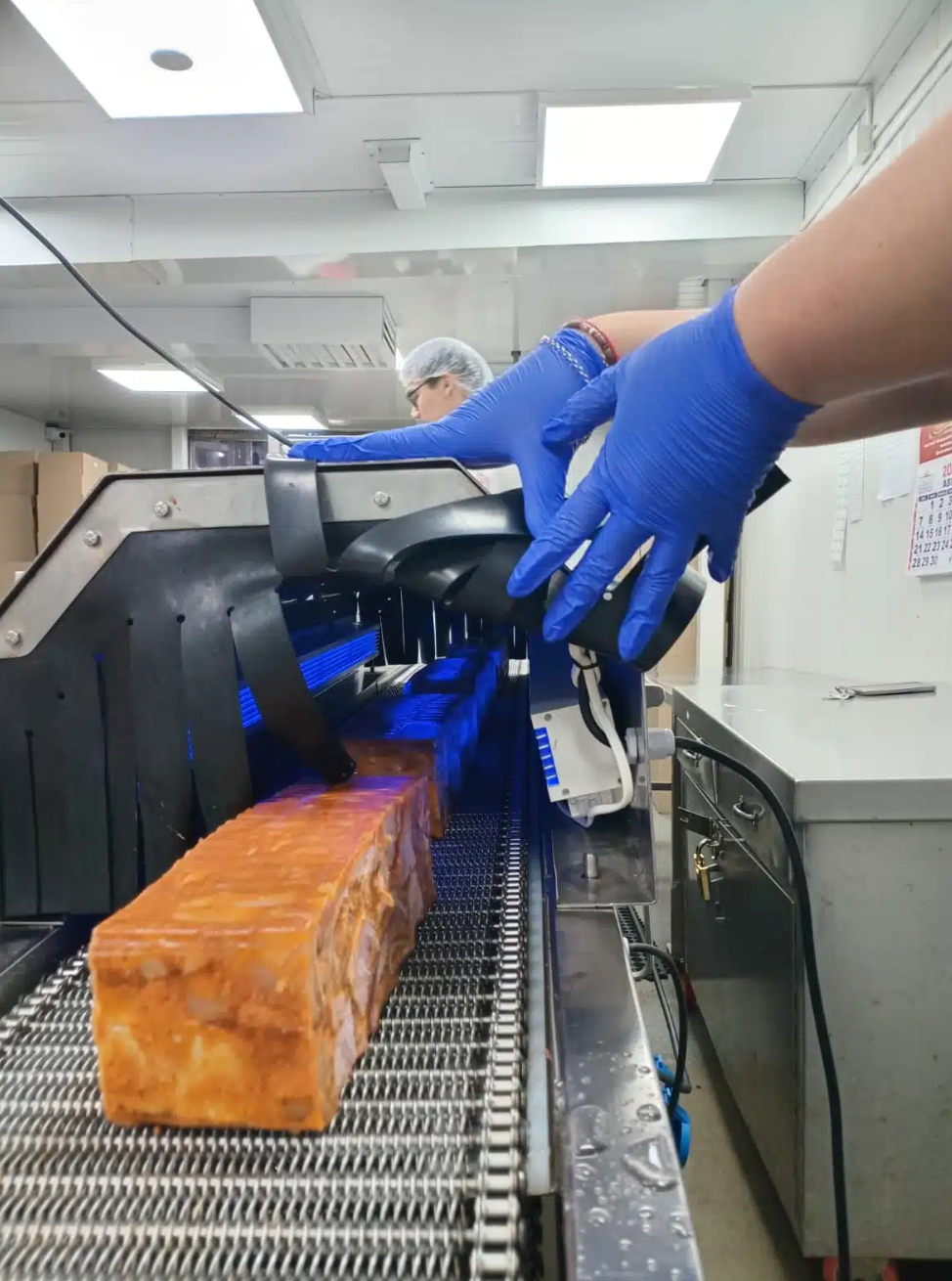
They wanted to protect food safety without leaning on preservatives alone. They deployed UV-Life on two fronts: treating the packaging rooms to stop cross-contamination, and applying UV-C directly to the product.
"We treat the packaging rooms to cut cross-contamination and we also apply UV-C directly to the product. The most important result was doubling the shelf life of our deli meats while keeping their taste and color."
25 years in business, 200 metric tons a month and a steady bet on preventive technology. See the sanitizing tunnel running:
Which UV-C equipment fits a meat and poultry processing line?
Two units cover most plants. The X50 bar mounts above the conveyor to treat product surfaces before packaging. The X36 recessed light handles fixed points such as packaging tables, transfer zones and equipment surfaces. Both are FCC, CE, SGS and CESMEC certified and install on existing lines without stopping production.
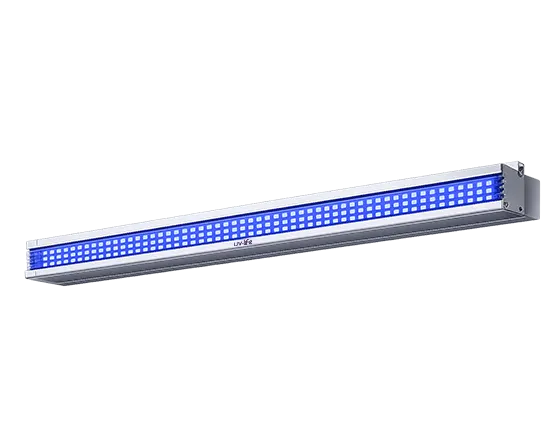
UV-C X50 Bar
High-output UV-C bar for mounting over conveyor belts in deli meat, sausage and other further processing lines.
- UV-C 260–280 nm · 480 mW UV output
- Generates no ozone · no residue
- Rated life 10,000 h (~2.7 years at 10 h/day)
- FCC · CE · SGS · CESMEC certified
- Dimensions 1200 × 60 × 50 mm (47 × 2.4 × 2 in)
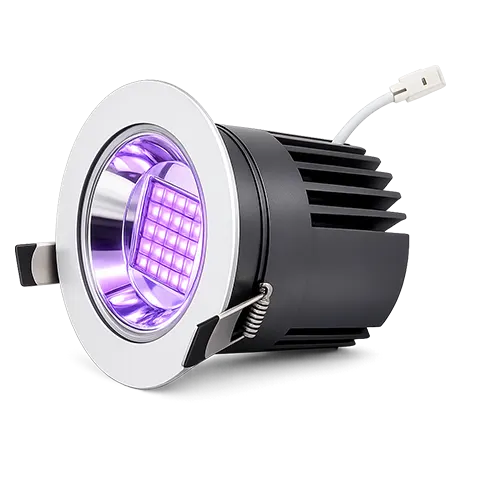
X36 UV-C Led Light
Recessed UV-C light for spot disinfection of surfaces and process zones inside packaging rooms.
- UV-C 260–285 nm · 400 mW UV output
- Generates no ozone · no residue
- Rated life 10,000 h (~2.7 years at 10 h/day)
- FCC · CE · SGS · CESMEC certified
- Diameter Ø89 mm (3.5 in)
Prices are in US dollars (USD). Sales tax, where applicable, is calculated at checkout or shown on the quote.
What plant QA and food safety managers ask us most
Can UV-C be used inside a cooler or refrigerated room?
Yes, and it is one of the applications where UV-C LED clearly beats a mercury tube. A tube loses output below 10 °C (50 °F) and needs minutes to stabilize; a 265 nm UV-C LED reaches full output instantly and cold does not degrade it. It mounts on the ceiling or above the racks and runs during unmanned shifts to lower the mold, spore and bacteria load in the air and on the surfaces that cause spoilage on chilled product.
How does UV-C fit into an existing sanitation and environmental monitoring program?
UV-C is documented as an added intervention inside your existing cleaning and sanitation program, not as a replacement for it. Plants normally record the equipment, the treated zones, the run times and the verification data from their own environmental monitoring swabs and product testing, exactly the way any other sanitation step is documented.
Why is Listeria monocytogenes so hard to eliminate in a deli meat plant?
Because it survives refrigeration and builds biofilms in drains, belts and equipment that resist chemical cleaning. UV-C works on the surfaces and the air of the packaging room, lowering the load before it recontaminates post-lethality exposed product.
Does UV-C change the taste, color or aroma of meat?
No. UV-C acts on the surface in seconds without adding anything and without generating heat. It does not alter sensory properties: deli meats keep their natural taste and color.
Can UV-C really double the shelf life of the product?
Treating the product surface directly before packaging lowers the initial microbial load, and that can double the time deli meats stay in optimal condition. The result depends on each process — which is why we run a no-cost assessment first.
Does UV-C replace nitrites and chemical preservatives?
UV-C works on the process, not on the formulation. It lowers the surface microbial load before packaging, which lets many customers reduce their dependence on preservatives. How far you can take it depends on each product.
Do I have to rebuild my production line?
No. The fixtures install over your existing conveyor and in your existing packaging rooms. A typical installation takes 1–2 days without stopping production.
Is UV-C safe for plant employees?
Yes, when it is installed correctly. The fixtures run in zones laid out to minimize direct exposure, and worker safety is part of how the installation is designed.
Does it work for the packaging room and for the product itself?
Yes. The configuration is set to treat the room environment (cutting cross-contamination) and/or the product surface on the belt (extending shelf life), depending on your process.
Struggling with Listeria or short shelf life in your plant?
Tell us about your process. Free technical assessment — no commitment, no sales pressure.