
UV-C water disinfection: inactivate bacteria, viruses and protozoa without chlorine or chemicals
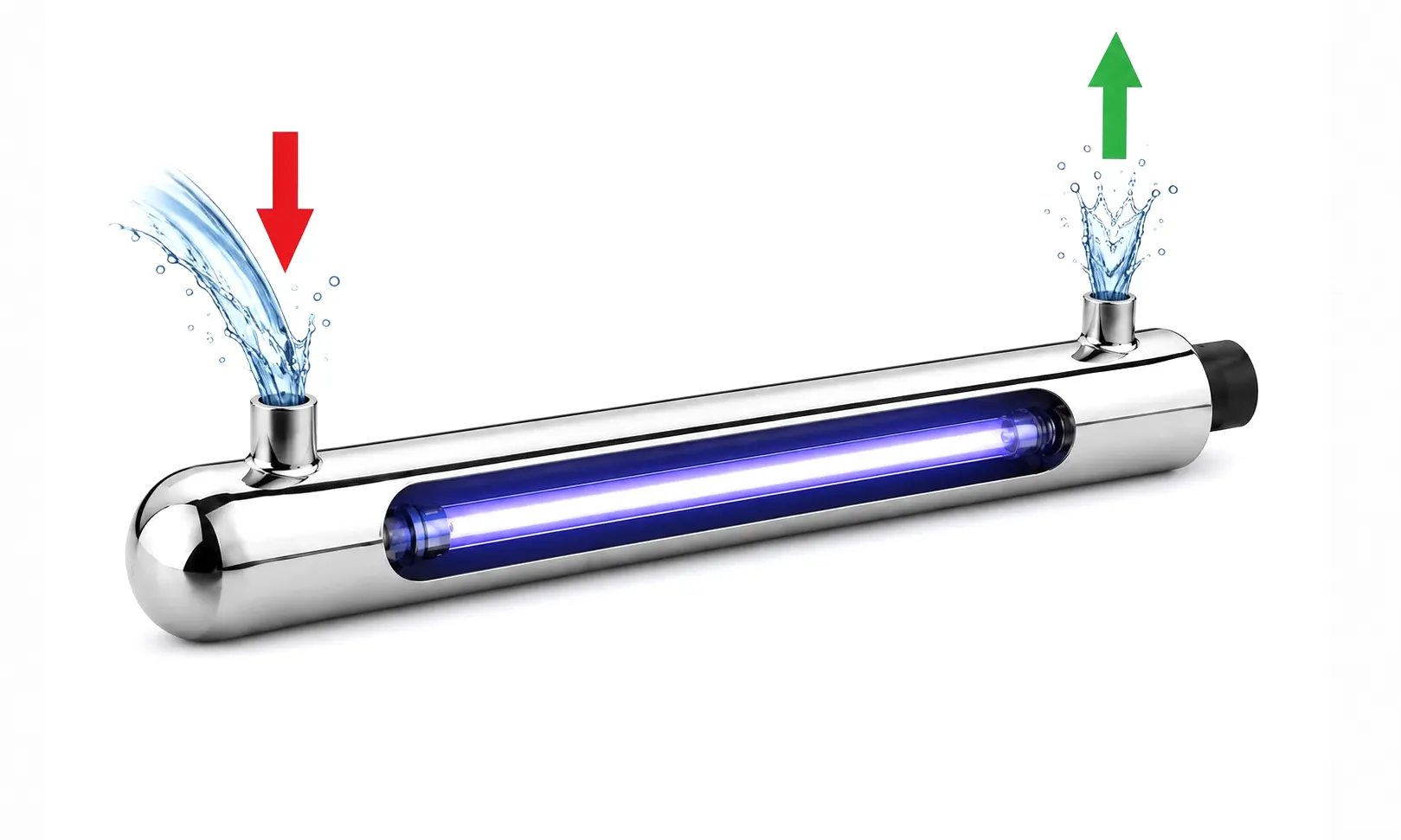
In-line UV-C reactor that disinfects process and drinking water without adding anything — no change to taste, odour or colour, and no by-products.
Why is water still a microbiological risk, even with chlorine?
Water enters the plant or the network apparently potable, but it can reach the process or the consumer carrying live pathogens. Chlorination has real limits that UV-C covers.
Chlorine-resistant pathogens
Cryptosporidium and Giardia survive chlorination at usual doses. Chlorine lets the most dangerous waterborne protozoa through.
Disinfection by-products
Chlorine reacts with organic matter and forms trihalomethanes and other unwanted by-products that affect water quality and perception.
Biofilms and recontamination
Tanks, pipes and equipment develop biofilms that resist cleaning and release bacterial load downstream, batch after batch.
Chlorine taste and odour
Raising the chlorine dose to “make sure” of disinfection alters the taste and odour of the water — critical in beverages, food and drinking water.
The critical point: water just before the process or the tap
This is where the microbial load entering your product or reaching the tap is determined. UV-C light acts exactly on that stretch — disinfecting water in line, without adding chemicals or leaving residues.
Escherichia coli and coliforms
Indicators of faecal contamination; their presence holds up batches and compromises the safety of process water.
Cryptosporidium
Chlorine-resistant protozoan; causes gastrointestinal outbreaks linked to poorly disinfected water.
Giardia lamblia
A cyst that resists conventional chlorination and is effectively inactivated by UV-C light.
Enteric viruses
Norovirus, rotavirus and others that chlorine does not always control and that UV-C inactivates.
What changes when you disinfect your water with UV-C
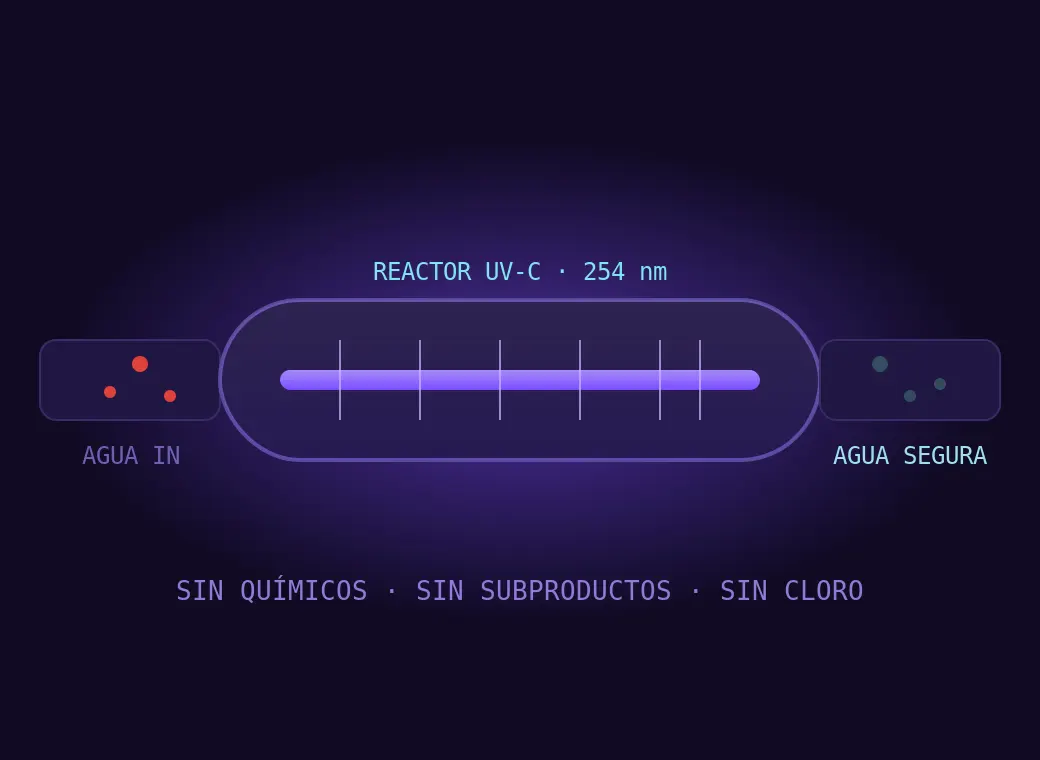
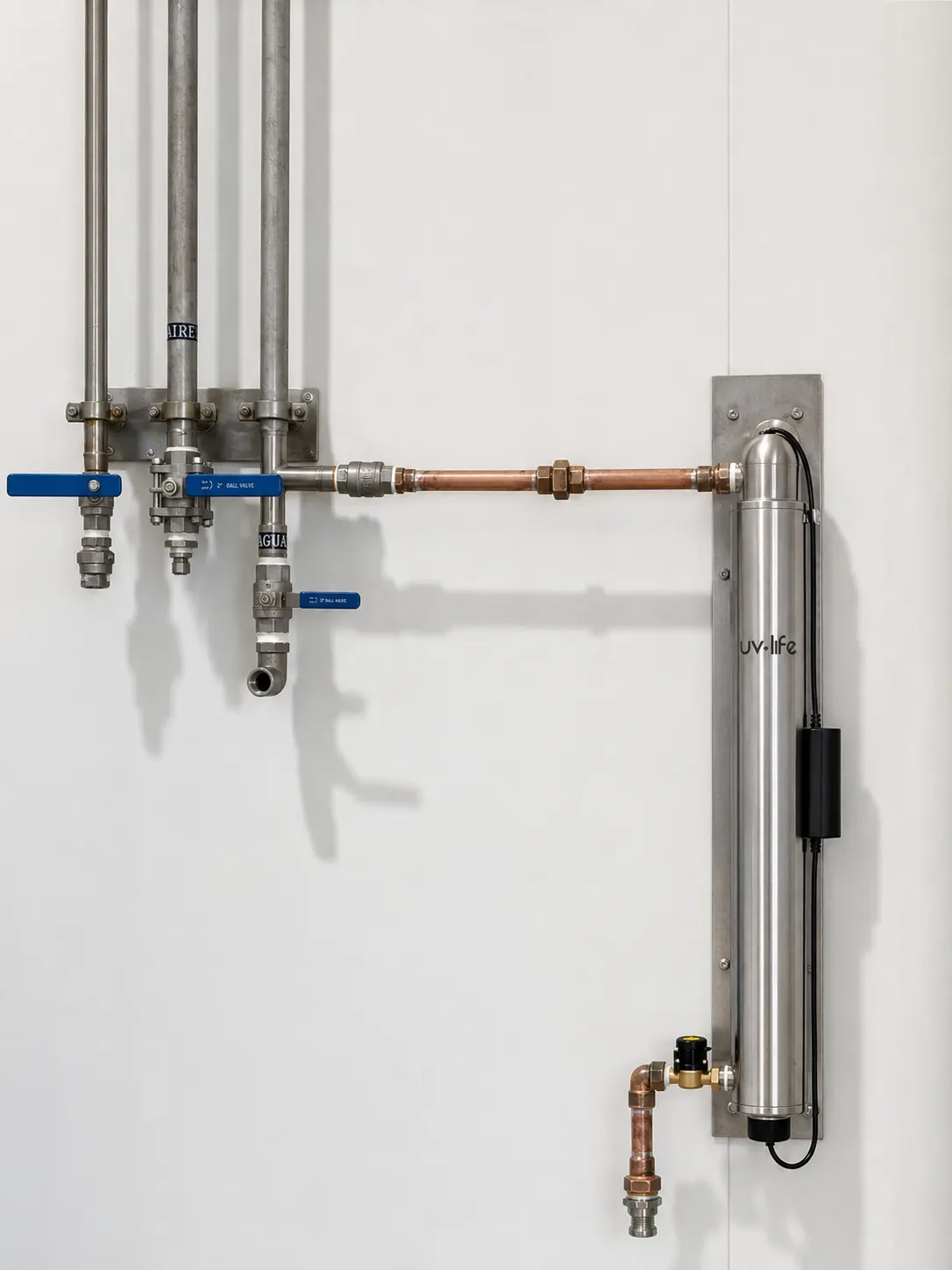
The UV-C reactor is installed in line on the process or drinking water pipe. Water flows through the chamber and receives germicidal light that inactivates microorganisms, without adding anything.
Inactivates chlorine-resistant pathogens
UV-C damages the DNA or RNA of Cryptosporidium, Giardia, bacteria and viruses and stops them from reproducing and causing infection — exactly where chlorine falls short.
THE DIFFERENTIATORNo chemicals or by-products
It adds no chlorine and forms no trihalomethanes. Water comes out disinfected with no change in taste, odour, colour or pH.
Disinfection in seconds, in line
Water is treated as it flows through the reactor, at your process flow rate, with no contact tanks or waiting times.
Fewer rejections and held batches
A reliable barrier against microbial load in the water reduces out-of-specification test results and reprocessing.
Low maintenance, no dosing
No chemical handling or storage. Maintenance is limited to periodic lamp replacement and cleaning of the quartz sleeve.
Quillayes strengthened the safety of its water with two UV-C reactors
A long-established Chilean food company that treats food safety as a culture. They added UV-C disinfection as an extra barrier for their water, without relying solely on chlorination.
They wanted to secure the microbiological quality of their water without adding more chemicals or altering its taste. They installed two in-line UV-C reactors, sized to their flow rate, as a disinfection step within their water system.
“We wanted an extra barrier that would protect the quality of our water without adding chemicals. With UV-Life’s UV-C light we strengthened the microbiological safety of our water without changing its taste or odour.”
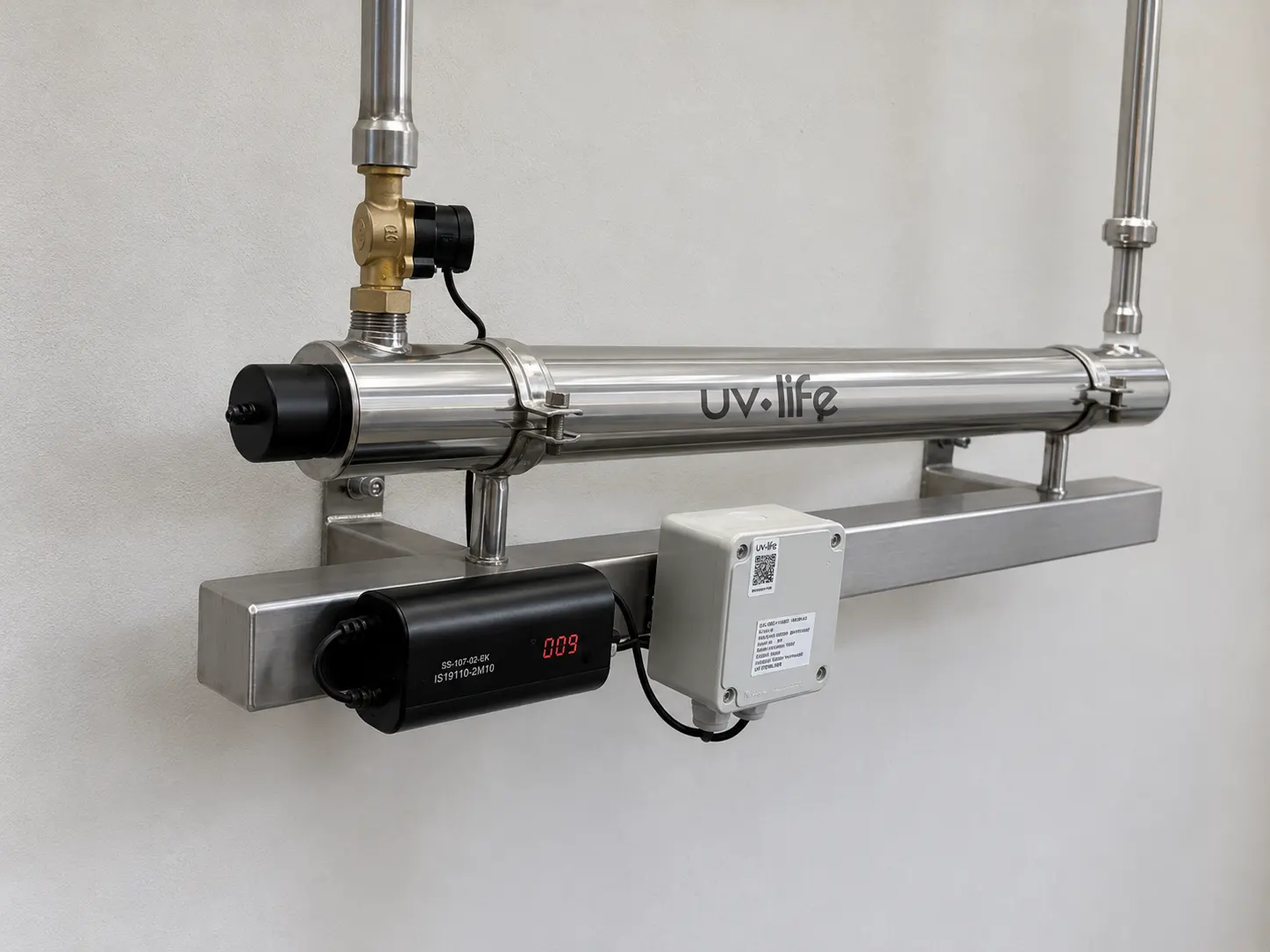
UV-C Water Reactor 2.3 m³
Germicidal ultraviolet reactor for in-line water disinfection, sized to your flow rate. Installed on existing pipework for the food industry, beverages, small water supply systems and buildings.
UV-C Water Reactor 2.3 m³
Stainless steel chamber with a 40 W UV-C lamp and quartz sleeve for continuous disinfection of process and drinking water. Electronic ballast with flow sensor and lamp failure alarm.
- Maximum flow rate 2.3 m³/h (10 gal/min)
- UV-C lamp 40 W · 254 nm
- Stainless steel chamber · 3/4" male connection
- Dimensions 890 × 63.5 mm · max. pressure 8 bar
- No ozone · no chemicals or residues
- Service life 10,000 hours · alarm and flow sensor
- FCC · CE · SGS · CESMEC certified
- Installation manual (PDF)
Reactors from 1.3 m³/h to 80 m³/h
What plant managers, quality teams and water operators ask
Does UV-C light replace chlorine in water treatment?
UV-C is primary disinfection: it inactivates bacteria, viruses and protozoa without adding chemicals or creating by-products. In many processes it replaces chlorination or greatly reduces it. Where a chlorine residual is needed in the distribution network, UV-C acts as the main barrier and chlorine only maintains that minimum residual.
Does UV-C inactivate Cryptosporidium and Giardia?
Yes. UV-C is particularly effective against Cryptosporidium and Giardia, protozoa that resist chlorination at usual doses. The light damages their DNA or RNA and prevents them from reproducing and causing infection.
Does UV disinfection change the taste, odour or colour of water?
No. UV-C adds nothing to the water and creates no by-products. It does not change taste, odour, colour or pH; it only inactivates the microorganisms that pass through the reactor.
What water quality does it need to work well?
Clear water: turbidity below 1 NTU and UV transmittance above 75%. That is why it is installed after filtration. Suspended solids, iron or high hardness shield microorganisms from the light and must be treated upstream of the UV reactor.
Does UV-C leave a residual in the network like chlorine?
No. It disinfects the water at the point where it is installed, but leaves no residual downstream. That is why it is placed as close as possible to the point of use or bottling; if a residual is required in the network, it is combined with a minimum dose of chlorine.
Do I need to shut down my plant to install the UV reactor?
In most cases, no. UV-C reactors are installed in line on the existing pipework, sized to the flow rate, and the work is scheduled in a maintenance window without modifying the whole water system.
What do Indian standards say about disinfecting water with ultraviolet light?
The applicable standards do not prescribe a specific technology: they require a result. IS 10500:2012, the Bureau of Indian Standards (BIS) specification for drinking water, sets the quality requirements that drinking water must meet, including its microbiological parameters. For food businesses, the Food Safety and Standards Act, 2006 and Schedule 4 of the FSS (Licensing and Registration of Food Businesses) Regulations, 2011 set out general hygienic and sanitary practices, including the use of potable water in food handling and processing, and water control forms part of the HACCP-based food safety system. UV-C disinfection is documented as one more barrier within that system, with its design dose and verification records; equipment and materials in contact with drinking water must meet the requirements of the applicable regulations.
Need to disinfect your water without adding chemicals?
Tell us your flow rate and how the water is used (food processing, beverages, small water supply systems, buildings). Free technical assessment.