
Ariztía disinfects its eggs with UV-C LED light right after washing
One of Chile's leading egg producers installed three X36 lights in a stainless-steel enclosure at the washer outlet. No chemicals, no extra water and no stopping the line.
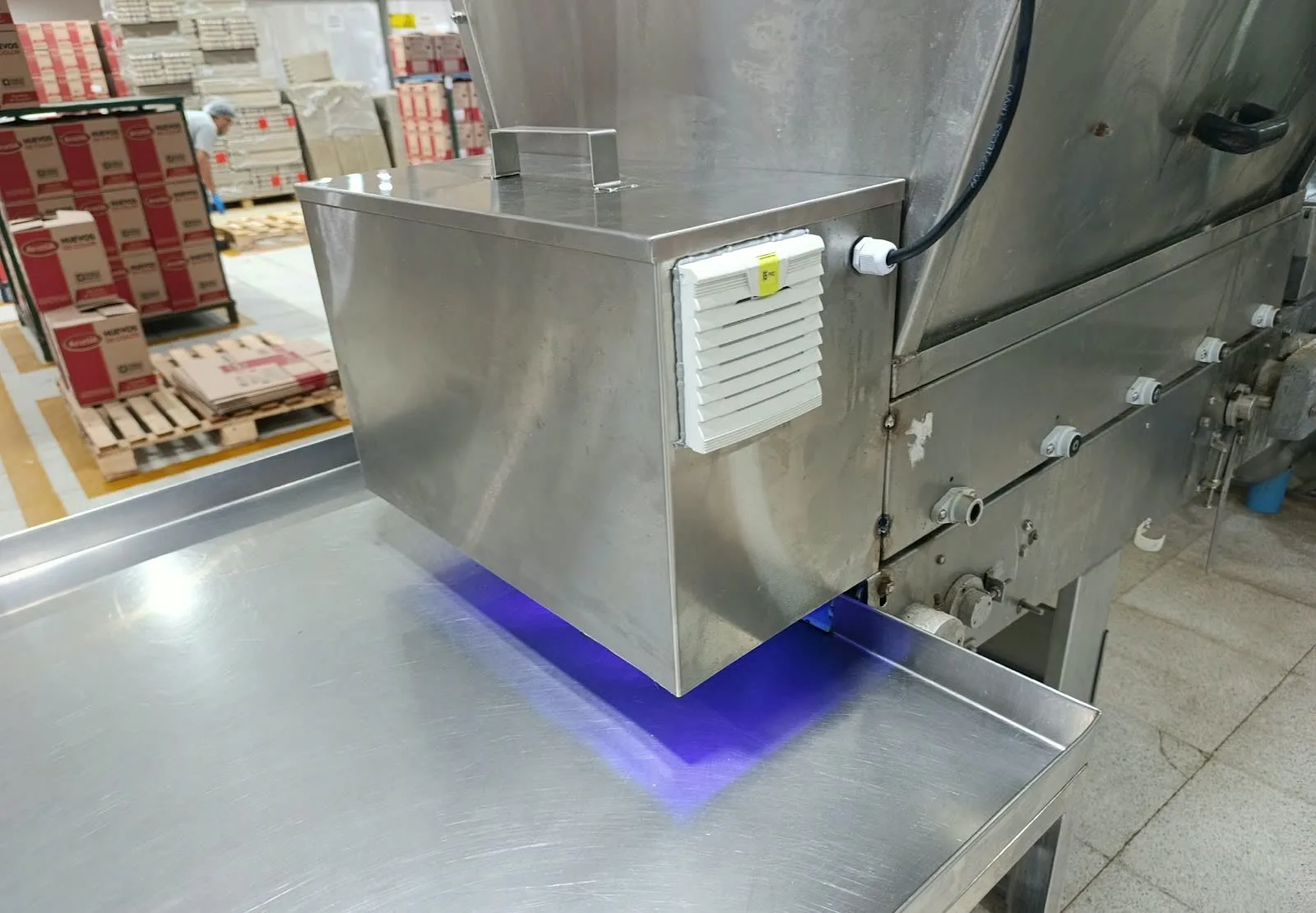 Ariztía plant · September 2026
Eggs leave the washer clean. UV-C protects that moment.
After washing, the eggs travel on rollers and belts towards grading and packing. Ariztía decided to add one more barrier right there, on the shell surface, without adding chemicals or moisture to the process.
- Installed over the existing line: the washer did not have to be changed.
- The rollers turn each egg as it moves forward, so the light reaches more of the shell.
- Disinfection happens in-line, at production speed.
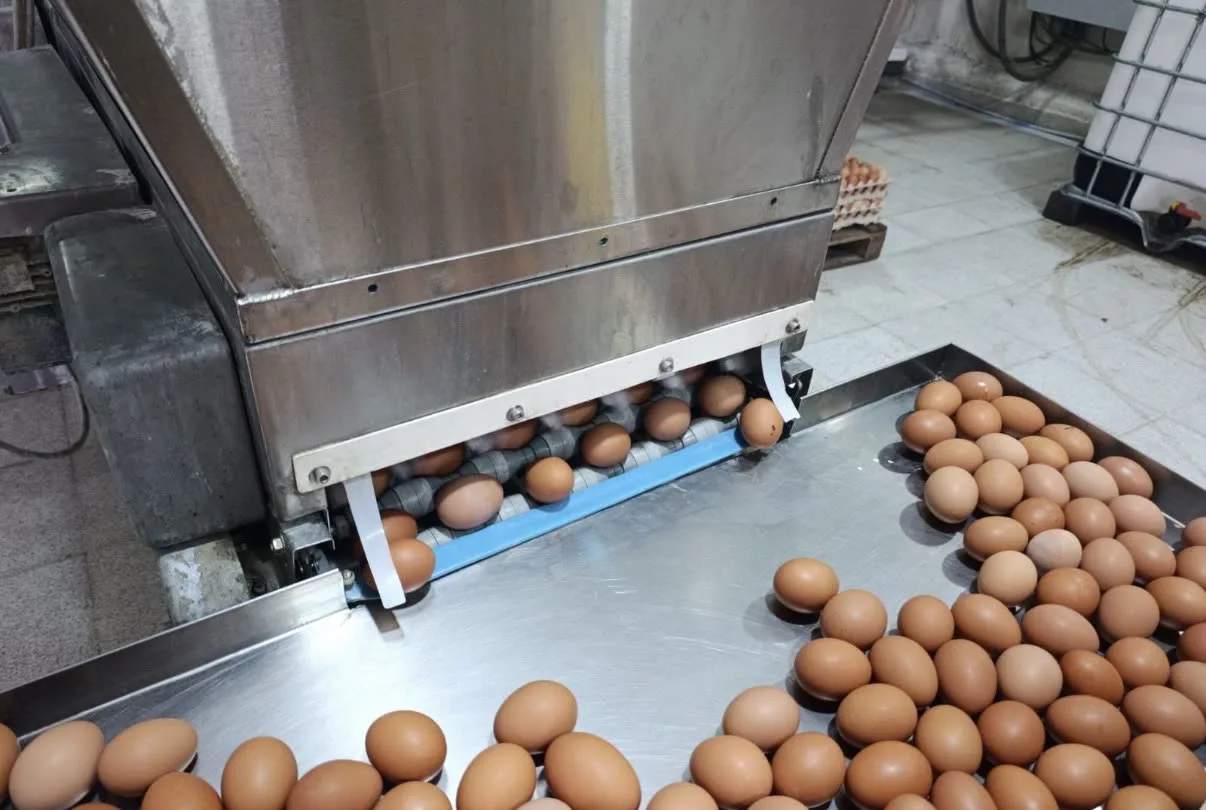
A simple enclosure, made to fit the line
Ariztía's maintenance team built the structure and attached it to the washer. UV-Life supplied three X36 lights.
Stainless-steel enclosure
Attached to the washer outlet, with a top handle so it can be lifted off for cleaning and maintenance.
Three X36 lights pointing down
The lights sit covered inside the enclosure and shine directly onto the eggs passing over the rollers.
Ventilation and sealed wiring
Side ventilation grille and a cable gland at the cable entry, suited to a washdown environment.
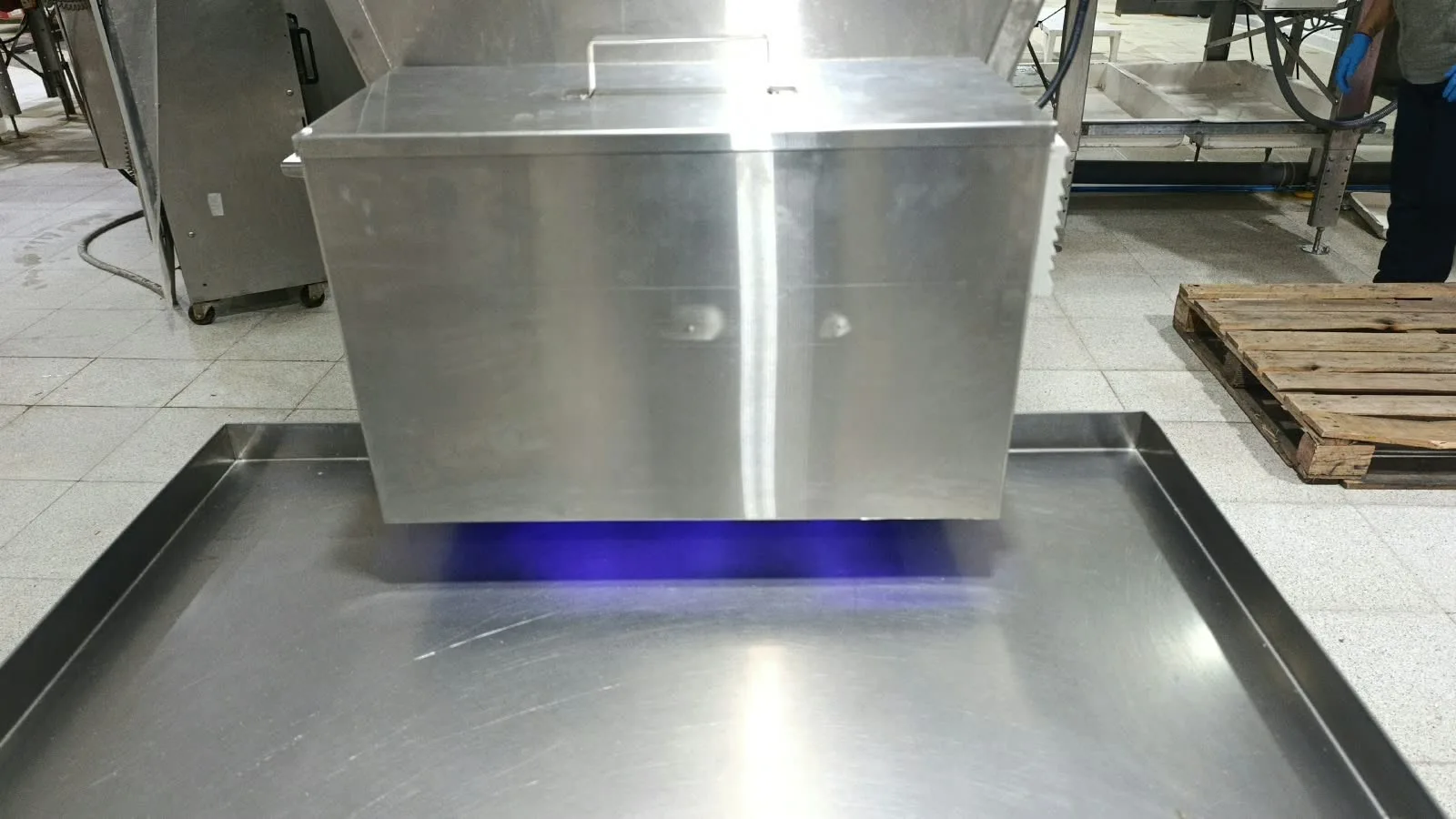
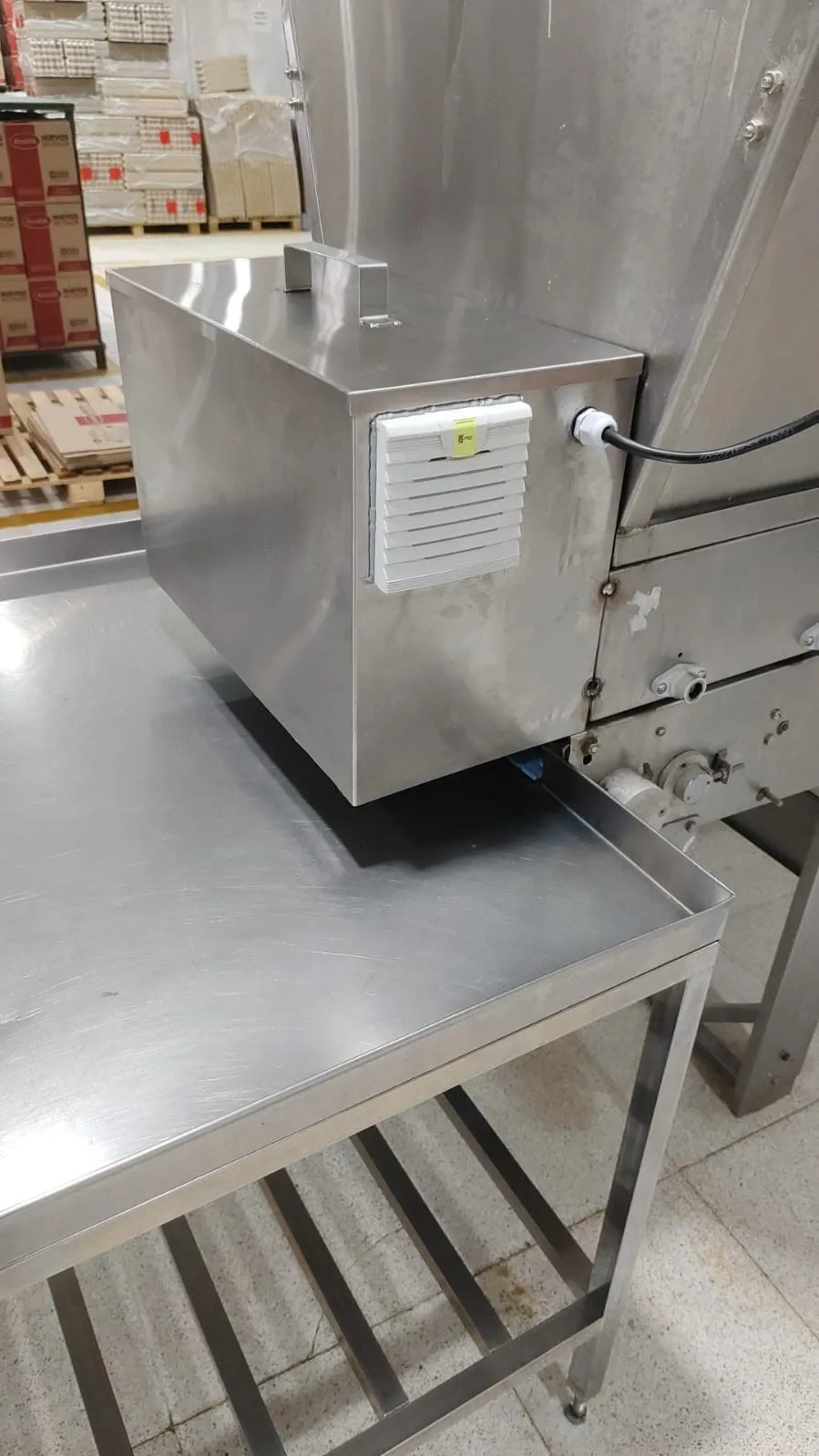
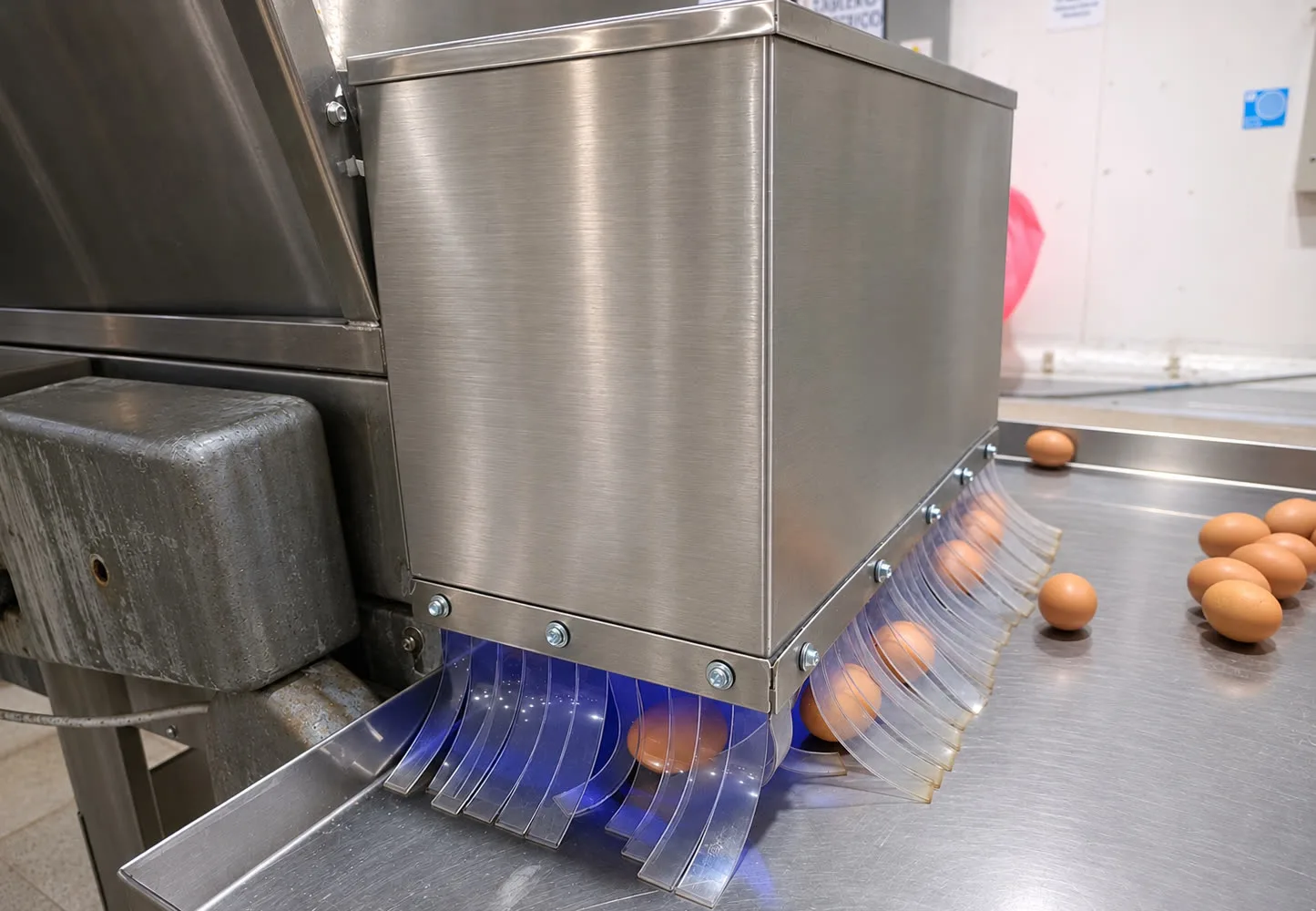
The line at work
The eggs pass under the UV-C enclosure without stopping production.
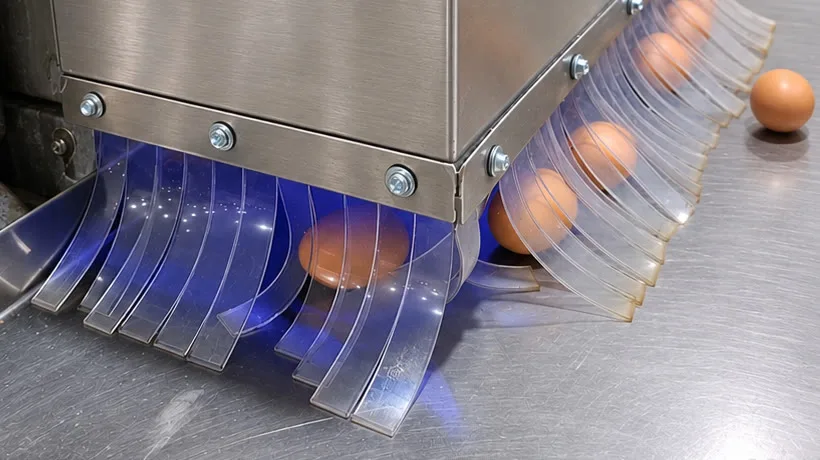
Curtains to contain the light
The enclosure has clear strip curtains at the inlet and the outlet.
- They keep the light inside the enclosure to protect operators from UV-C reflecting off the steel.
- They increase the eggs' exposure time.
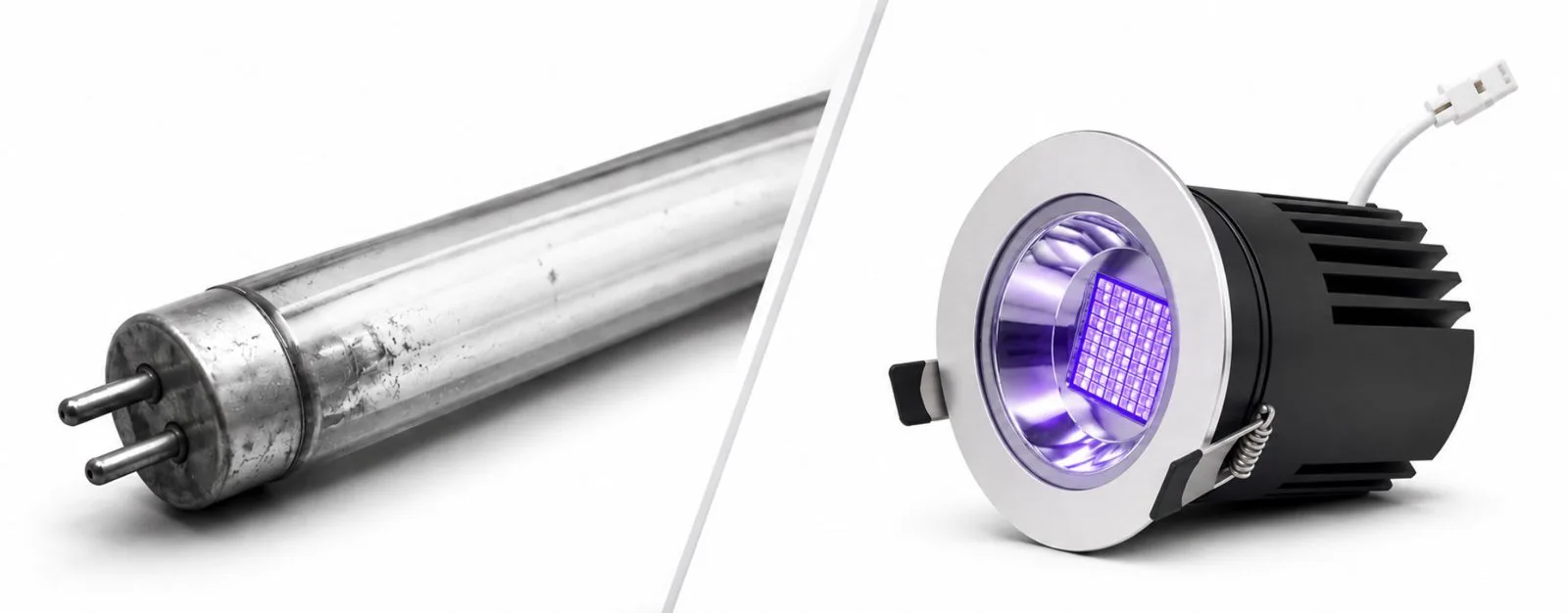
5 technical differences between a germicidal tube and a UV-C LED lamp
Both technologies emit UV-C with germicidal action. What changes is the emission source, the materials, the wavelength, where the light goes and how the equipment ages.
What UV-C does on eggs, and what it doesn't
What it does
- Reduces the microbial load on the part of the shell surface that receives the light.
- Works in-line, with no chemicals, no water and no residue.
- Adds a barrier after washing, where today there is none.
What it doesn't do
- It does not penetrate the shell or act inside the egg.
- It does not replace washing, good hygiene practices or the HACCP plan.
- Its effect depends on the dose: distance, line speed and time under the light. That is why it is sized for each plant.
Food producers across Latin America already use UV-Life UV-C LED

UV-C on egg lines
Where is UV-C installed on an egg line?
At Ariztía, right at the washer outlet: a stainless-steel enclosure attached to the machine, with three X36 UV-C LED lights pointing down onto the rollers that carry the freshly washed eggs.
Does UV-C replace egg washing?
No. UV-C acts on the shell surface as an additional barrier after washing. It does not penetrate the egg and it does not replace washing, good hygiene practices or the plant's HACCP plan.
What are the curtains on the UV-C enclosure for?
They keep the light inside the enclosure to protect operators from UV-C reflecting off the steel, and they increase the eggs' exposure time.
How many X36 lights does my line need?
It depends on the width of the line, the conveyor speed and the distance between the light and the eggs. We calculate it in a free UV-C audit of your plant.
Does your plant wash or grade eggs?
We review your line and tell you how many lights you need and where to place them. Free of charge and with no obligation. Prefer email? Write to sales@uv-life.com.
Message us on WhatsApp