Ultraviolet light type C · UV-C

UV-C lamps for microbiology laboratories: cut fungi and bacteria in the air and on your benches, without chemicals

A UV-C lamp for a microbiology laboratory is a germicidal fixture that emits ultraviolet light near 265 nm to inactivate viruses, bacteria and fungi in the air and on benches, cabinets and equipment, with no chemicals and no residue. UV-Life offers three UV-C LED models, from US$119 to US$690 plus applicable sales tax, sized by room area.

Colonies showing up where they shouldn't? Re-plating because of cross-contamination? Environmental monitoring results out of range? We lower the microbiological load in your rooms with germicidal UV-C LED lamps.

  • Contaminated plates
  • Repeated platings
  • Environmental monitoring out of range
  • Cabinets with mercury tubes
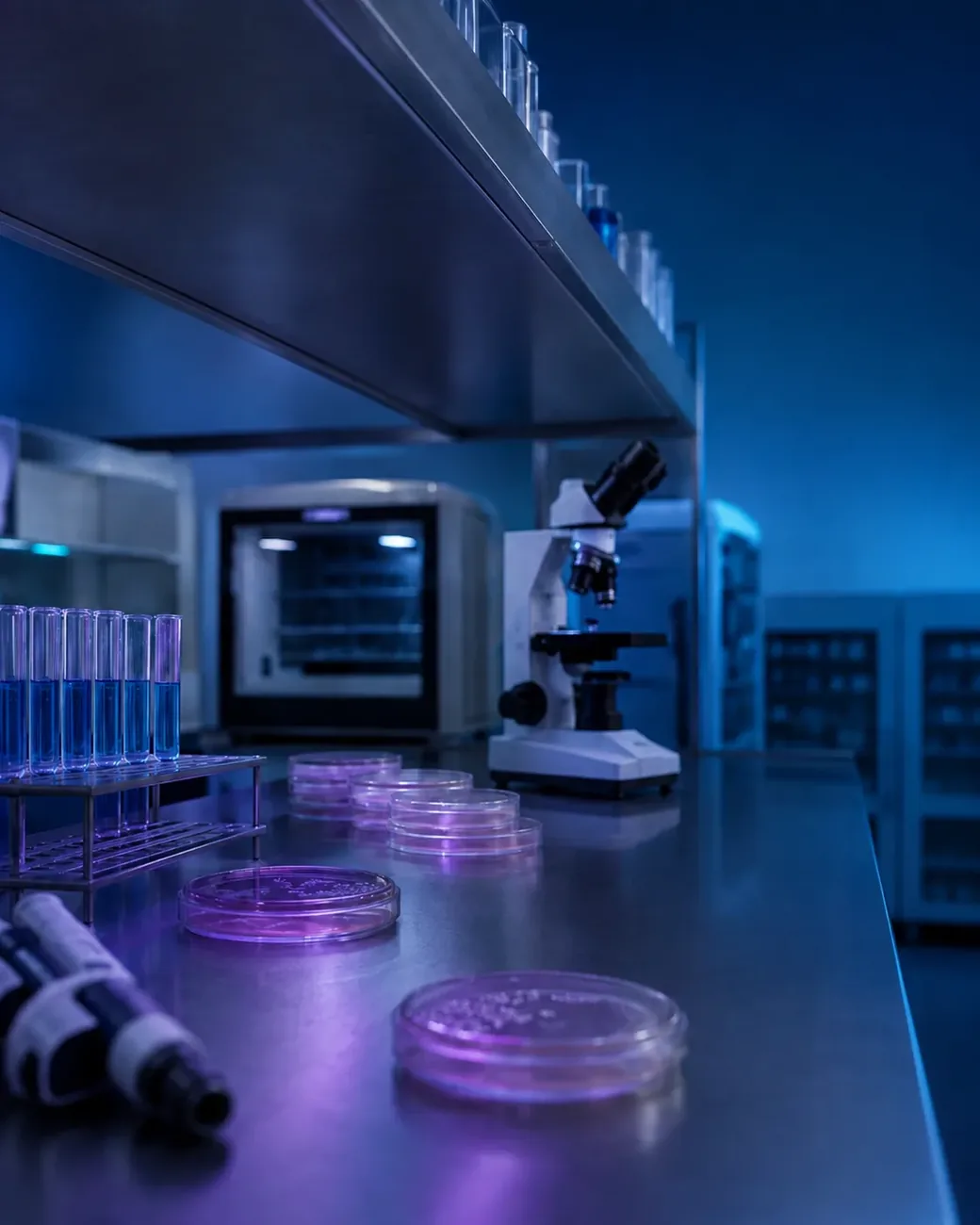
Microbiology laboratory bench with Petri dishes, test tubes and a microscope under a germicidal UV-C lamp
Inactivates viruses, bacteria and fungi
99.9%Reduction of viruses, bacteria and fungi
265 nmGermicidal peak with LED technology
+10,000 hRated life with no tube replacements
0 mgOf mercury, ozone and chemicals

The science behind it

How does UV-C light disinfect a microbiology laboratory?

UV-C is the germicidal band of ultraviolet light, the part the ozone layer blocks. A UV-C LED lamp reproduces it inside your room under control: the light reaches microorganisms in the air and on surfaces, breaks their genetic material at 265 nm, and leaves them unable to reproduce.

1

It reaches the microorganism

UV-C radiation reaches viruses, bacteria, fungi and yeasts suspended in the room air and settled on benches, equipment and work surfaces.

2

It damages their DNA

At 265 nm, the germicidal peak, the energy breaks the bonds of the genetic material. The microorganism is inactivated and loses the ability to reproduce.

3

It lowers the environmental load

A lower load in the room means fewer viable particles landing on open plates and less risk of cross-contamination between samples.

Dose is everything. Effectiveness depends on four variables: lamp output, exposure time, distance to the target and the geometry of what you are treating. That is why we do not sell a standard unit: we set the dose for your room.

Where it goes

Which areas of a microbiology laboratory need UV-C?

Not every area needs the same equipment or the same protocol. These are the ones our customers ask about most.

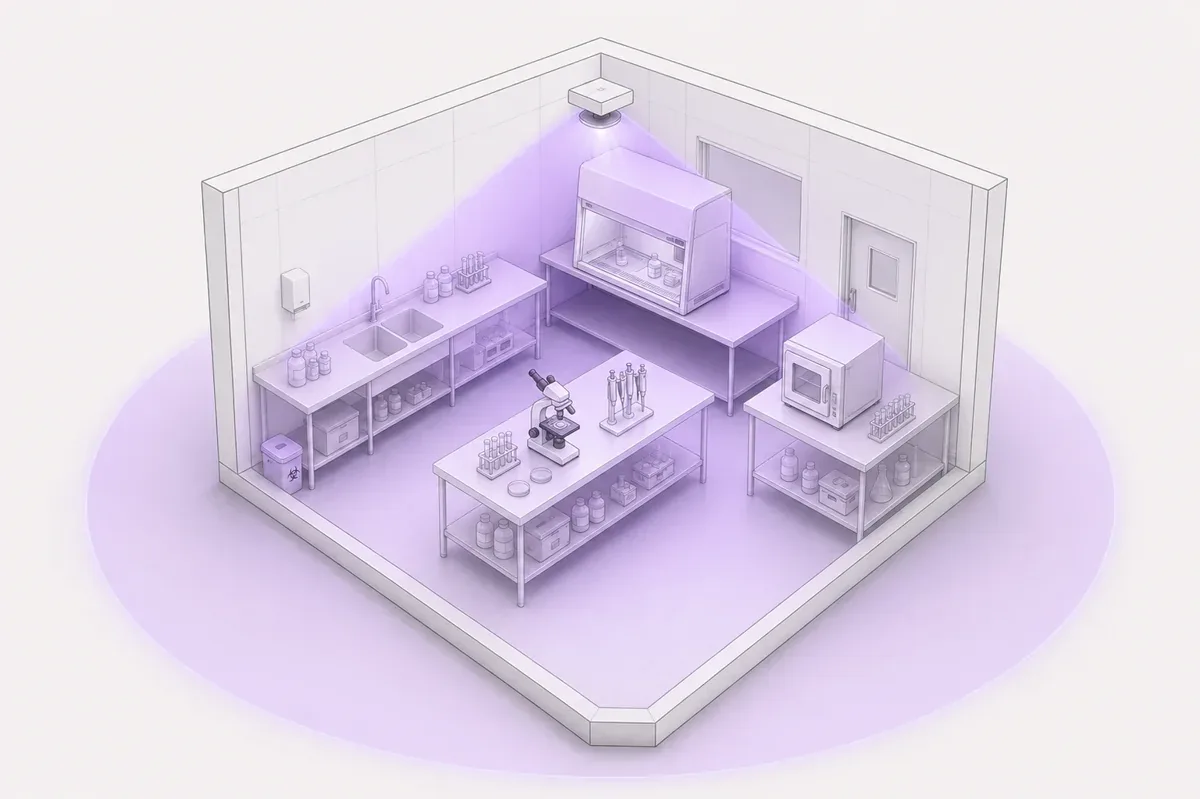
Isometric illustration of a laboratory with a ceiling-mounted germicidal UV-C lamp, biosafety cabinet, benches, microscope and plating area

Sample prep and plating area

The most sensitive point: plates sit open, exposed to room air while they are being handled.

Work benches

Bench tops, sample holders and instruments that get touched dozens of times a shift.

Biosafety cabinet and laminar flow hood

One of the most demanding zones: every time the sash opens, room air load gets in.

Media preparation

The autoclave and prep zone, where one contamination event carries into every batch that follows.

Incubators

Warm, humid environments — ideal conditions for environmental molds to take hold.

Airlocks and gowning rooms

Staff movement is one of the main routes microbiological load takes into a cleanroom or aseptic environment.

The lamps

Which UV-C lamp fits your lab: UFO 200, X36 or X50?

We will recommend one of the three based on the space, how it is used and what you are trying to control.

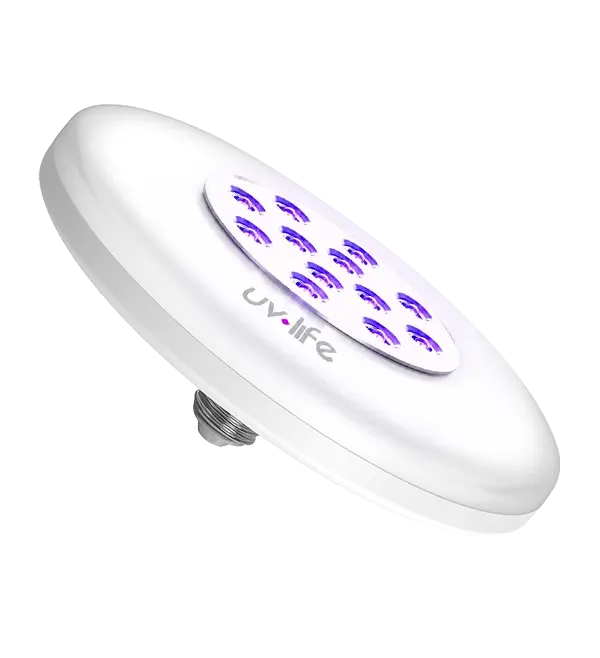
UV-Life UFO 200 UV-C lamp with occupancy sensor for laboratory use

UFO 200 Light

UV-C LED light that lights and disinfects benches and lab rooms, with an occupancy sensor so it can run during the workday.

  • Covers up to 16 m² (172 sq ft)
  • UV-C 260–280 nm
  • 180 mW UV output
  • No mercury
  • Generates no ozone · no residue
  • LED lighting + UV-C disinfection
  • 5.8G occupancy sensor
  • Rated life +10,000 h
  • FCC · CE · SGS certified

US$119 + sales tax
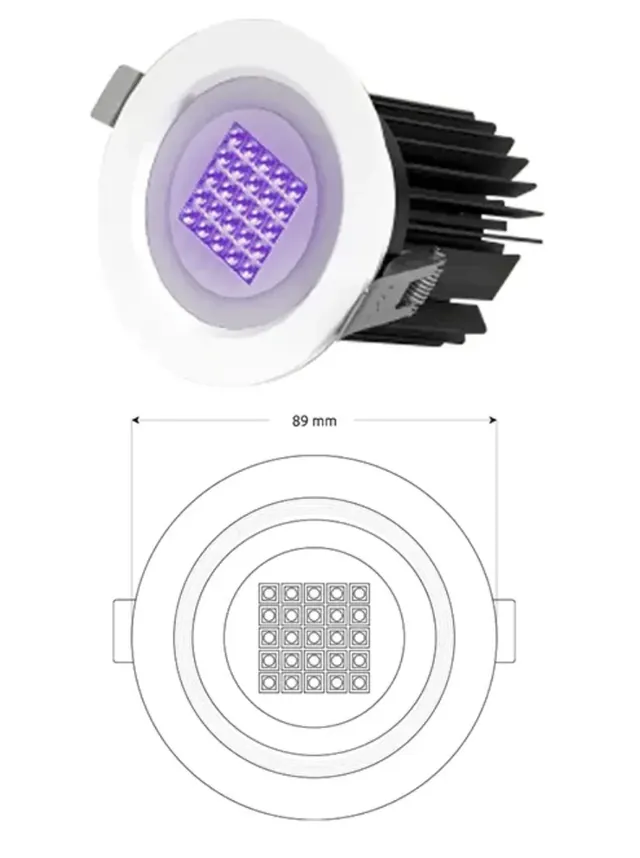
UV-Life X36 UV-C recessed light for laboratory disinfection

X36 UV-C Led Light

Recessed UV-C light for spot disinfection of surfaces and critical zones in the laboratory.

  • Covers up to 16 m² (172 sq ft)
  • UV-C 260–280 nm
  • 400 mW UV output
  • No mercury
  • Generates no ozone · no residue
  • Rated life 10,000 h (~2.7 years at 10 h/day)
  • FCC · CE · SGS certified
  • Diameter Ø89 mm (3.5 in) · 25 UV-C LEDs

US$279 + sales tax

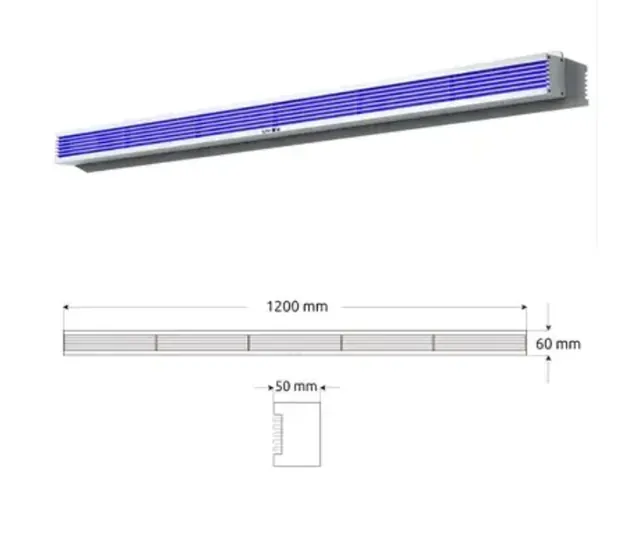
UV-Life X50 UV-C bar for disinfecting larger laboratory rooms

UV-C X50 Bar

High-output UV-C bar to mount over benches, cabinets or critical zones of the laboratory.

  • Covers up to 30 m² (323 sq ft)
  • UV-C 260–280 nm
  • 480 mW UV output
  • No mercury
  • Generates no ozone · no residue
  • Rated life 10,000 h (~2.7 years at 10 h/day)
  • FCC · CE · SGS certified
  • Dimensions 1200 × 60 × 50 mm (47 × 2.4 × 2 in)

US$690 + sales tax

Prices are in US dollars (USD). Sales tax, where applicable, is calculated at checkout or shown on the quote.

The UV-C LED advantage

UV-C LED lamp vs. mercury germicidal tube: what is the difference?

More output. Safer.

Mercury germicidal tube

  • Contains mercury: hazardous waste and a contaminating breakage risk
  • Output spread outside the germicidal peak
  • Risk of ozone generation
  • Fragile, with frequent replacements
  • Loses output gradually, and the drop is hard to detect

UV-Life UV-C LED lamp

  • 100% LED, no mercury and no hazardous waste to manage
  • Emits at the germicidal peak: 265 nm
  • Generates no ozone
  • More than 10,000 hours of rated life
  • Radiation you can aim at the zone you need to treat

Trust

Laboratories already using UV-Life

Customers in Chile, Argentina, Peru and Uruguay, with validations from MINSAL and ISP — Chile's Ministry of Health and Public Health Institute — plus SGS and Bureau Veritas testing.

Dimerco, a UV-Life customer mAbxience, a UV-Life customer Pontificia Universidad Catolica de Chile, a UV-Life customer Universidad Adolfo Ibanez, a UV-Life customer Universidad de Concepcion, a UV-Life customer ADL Diagnostic Chile, a UV-Life customer Universidad de Las Americas, a UV-Life customer

See the UV-C laboratory studies →

Frequently asked questions

UV-C lamps in the microbiology laboratory

Where does UV-C fit in a laboratory contamination control program?

UV-C is documented as a decontamination procedure for surfaces, cabinets and room air inside the contamination control program the lab already runs. You record the treated zones, the dose parameters (fixture output, exposure time and distance) and the verification results from your own environmental monitoring, the same way any other decontamination step is recorded.

How does a UV-C lamp for a laboratory work?

A laboratory ultraviolet lamp emits UV-C radiation, the germicidal band of the spectrum. That radiation penetrates the cell wall of viruses, bacteria and fungi and damages their DNA, so they lose the ability to reproduce and die. It works by light exposure, not by chemical contact.

Which UV-C lamp does a microbiology laboratory need?

It depends on the square footage and on whether people are in the room. The UFO 200 lights and disinfects up to 16 m² (172 sq ft) and has an occupancy sensor, so it can run during the workday. The X36 covers 16 m² and the X50 up to 30 m² (323 sq ft); both are higher output, germicidal only, and run in cycles with the room empty.

Can a UV lamp run while staff are working in the lab?

Only with equipment that has a 5.8G occupancy sensor, such as the UFO 200, which cuts the UV-C emission as soon as it detects movement. The X36 and X50 have no sensor and are scheduled in cycles with the laboratory unoccupied, for example at the end of the day or between shifts.

Can a UV-C LED lamp replace the mercury germicidal tube in a biosafety cabinet?

A UV-C LED lamp does the same germicidal job without mercury, which removes both the risk of a contaminating breakage inside the lab and the hazardous waste handling that goes with it. It also emits at the 265 nm germicidal peak, generates no ozone and exceeds 10,000 hours of rated life.

How long does a UV-C lamp take to disinfect a laboratory?

The time depends on dose, which comes from four variables: lamp output, exposure time, distance to the surface and the geometry of the object. At short distance the reduction happens in seconds; a whole room is run on longer cycles. At UV-Life we define the dose for each laboratory.

Does ultraviolet light leave residue in the lab?

No. UV-C disinfection works by radiation and not by chemical contact, so it leaves no residue, film or odor on benches, equipment or samples. UV-Life UV-C LED lamps contain no mercury and generate no ozone, so they introduce no contaminants into the room.

What maintenance does a UV-C LED lab lamp need?

Maintenance is limited to cleaning the emitting surface periodically, because dust cuts effective irradiance, and replacing the unit at the end of its rated life of more than 10,000 hours. Unlike a mercury tube, it needs no frequent replacements and no hazardous waste handling.

Has UV-Life UV-C technology been tested by a third party?

Yes. It carries validations from MINSAL and ISP — Chile's Ministry of Health and Public Health Institute — plus SGS and Bureau Veritas testing, along with in-house and customer microbiology studies measuring reductions in coliforms, aerobic mesophilic counts, molds and yeasts on surfaces, in air and in water. See the studies →

How much does a UV-C lamp for a laboratory cost?

UV-Life pricing starts at US$119 plus applicable sales tax for the UFO 200, which lights and disinfects up to 16 m² (172 sq ft) and includes an occupancy sensor. The X36 germicidal light is US$279 and the X50, which covers up to 30 m² (323 sq ft), is US$690.

Take the next step

Let's raise the contamination control standard in your lab

Tell us the square footage of the room and what you are trying to control. We will recommend the lamp and the dose that match your case.

Scroll To Top