
UV water disinfection: inactivate bacteria, viruses and protozoa without chlorine or chemicals
An inline UV-C reactor that disinfects your process water without adding anything — no change to taste, odor or color, and no disinfection byproducts.
Why is water still a microbiological risk, even with chlorine?
Chlorine has real limits. Water can arrive at the plant looking clean and still carry live organisms: Cryptosporidium and Giardia survive normal chlorine doses, biofilms in tanks and piping release bacteria downstream, and raising the dose to compensate creates disinfection byproducts and a chlorine taste in the finished product.
Chlorine-resistant pathogens
Cryptosporidium and Giardia survive chlorination at normal doses. Chlorine lets the most dangerous protozoa in water pass straight through.
Disinfection byproducts
Chlorine reacts with organic matter and forms trihalomethanes and other unwanted byproducts that affect both quality and how the water is perceived.
Biofilms and recontamination
Tanks, piping and equipment build biofilms that resist cleaning and shed bacterial load downstream, batch after batch.
Chlorine taste and odor
Raising the chlorine dose to "make sure" changes the taste and odor of the water — critical in beverages, food and process applications.
The critical point: the water right before it enters the process
That is where the microbiological load that reaches your product is set. UV-C acts on exactly that stretch — disinfecting the water inline, without adding chemicals and without leaving residue.
Escherichia coli and coliforms
Indicators of fecal contamination; a positive result holds lots and puts process water safety in question.
Cryptosporidium
A chlorine-resistant protozoan behind gastrointestinal outbreaks linked to poorly disinfected water.
Giardia lamblia
A cyst that survives conventional chlorination and is effectively inactivated by UV-C light.
Enteric viruses
Norovirus, rotavirus and others that chlorine does not always control and that UV-C inactivates.
What does a UV water disinfection system actually do?
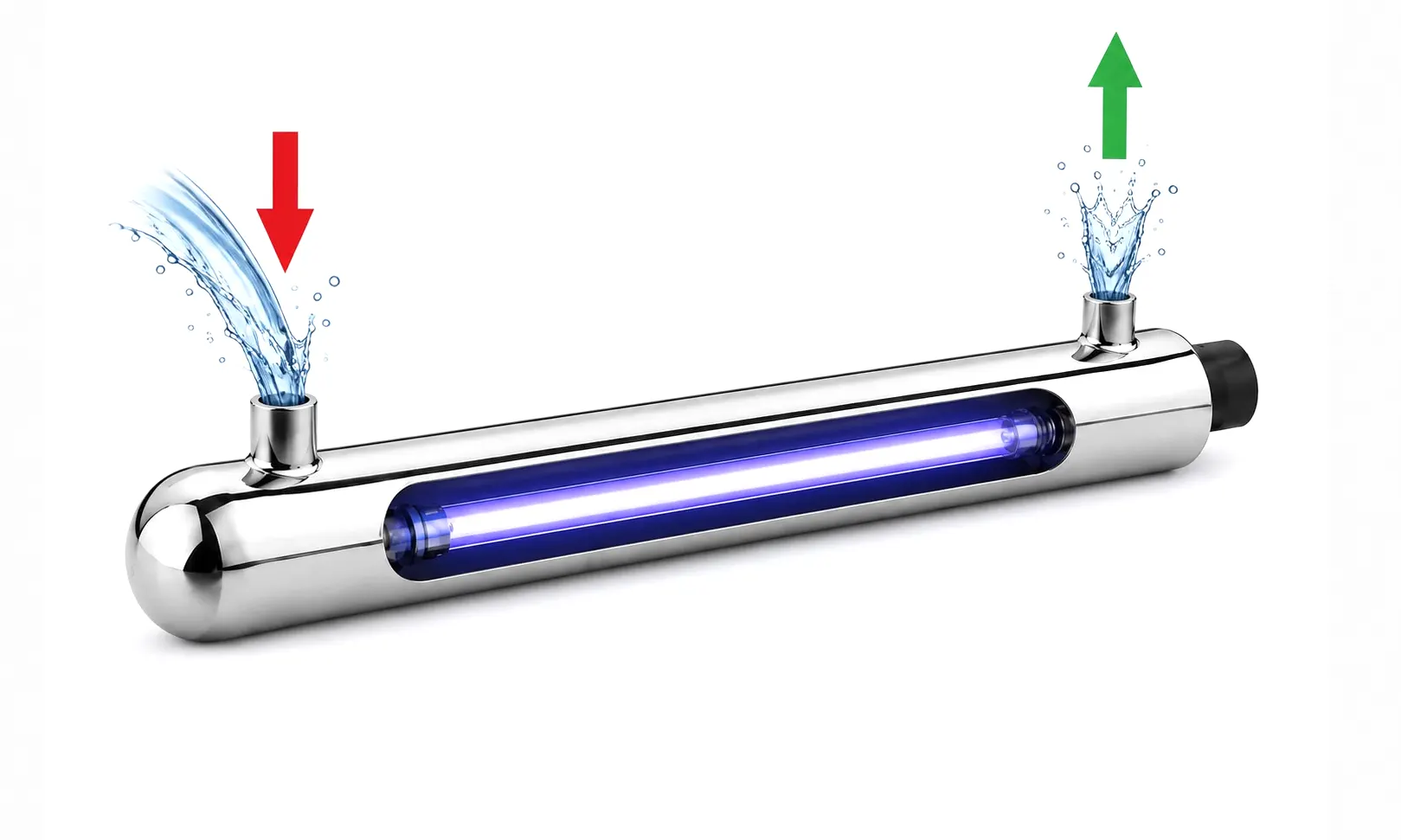
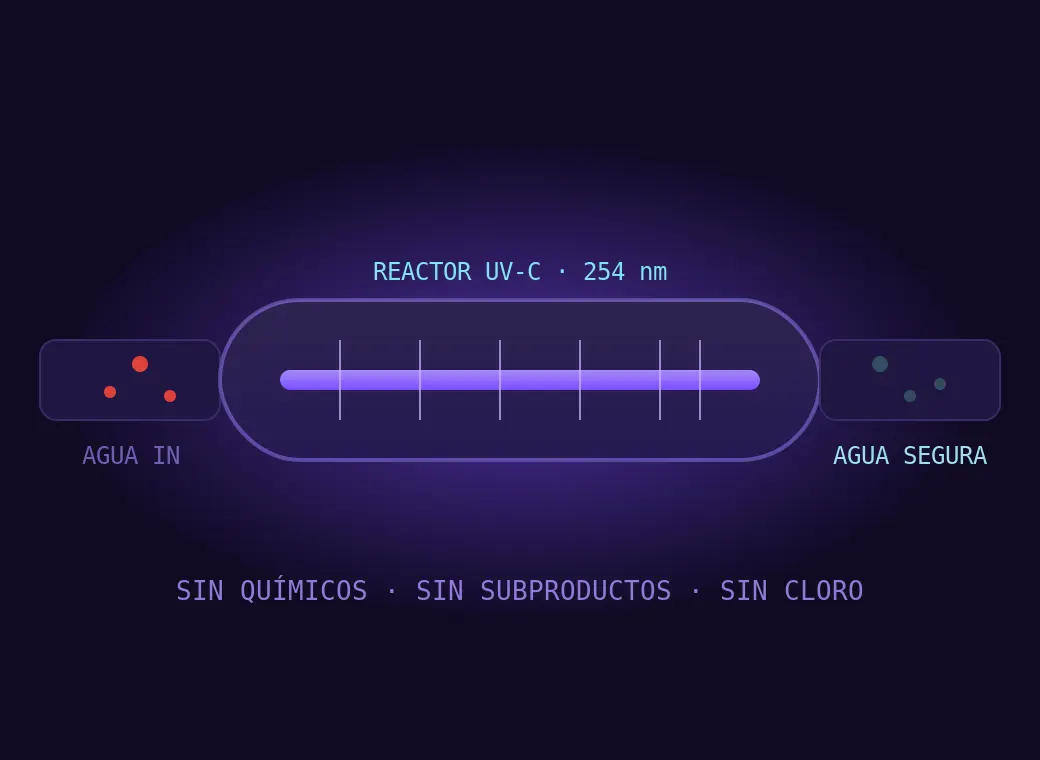
A UV water treatment system passes water through a stainless steel chamber where a germicidal UV-C lamp irradiates it. The light damages the DNA or RNA of bacteria, viruses and protozoa so they cannot reproduce or infect. Nothing is added to the water, and the whole process takes the seconds it spends inside the chamber.
Inactivates chlorine-resistant pathogens
UV-C damages the DNA or RNA of Cryptosporidium, Giardia, bacteria and viruses so they cannot reproduce or infect — exactly where chlorine falls short.
THE DIFFERENTIATORNo chemicals, no byproducts
It adds no chlorine and creates no trihalomethanes. The water leaves disinfected with no change to taste, odor, color or pH.
Inline disinfection in seconds
Water is treated as it passes through the reactor, at your process flow rate, with no contact tanks and no hold times.
Fewer holds and rejected lots
A reliable barrier against microbiological load in the water means fewer out-of-spec results and less rework.
Low maintenance, no dosing
No chemical handling or storage. Maintenance comes down to periodic lamp replacement and cleaning the quartz sleeve.
Quillayes reinforced its water safety with two UV-C reactors
A long-established Chilean food company that treats food safety as a culture. They added UV-C disinfection as an extra barrier on their water instead of relying on chlorination alone.
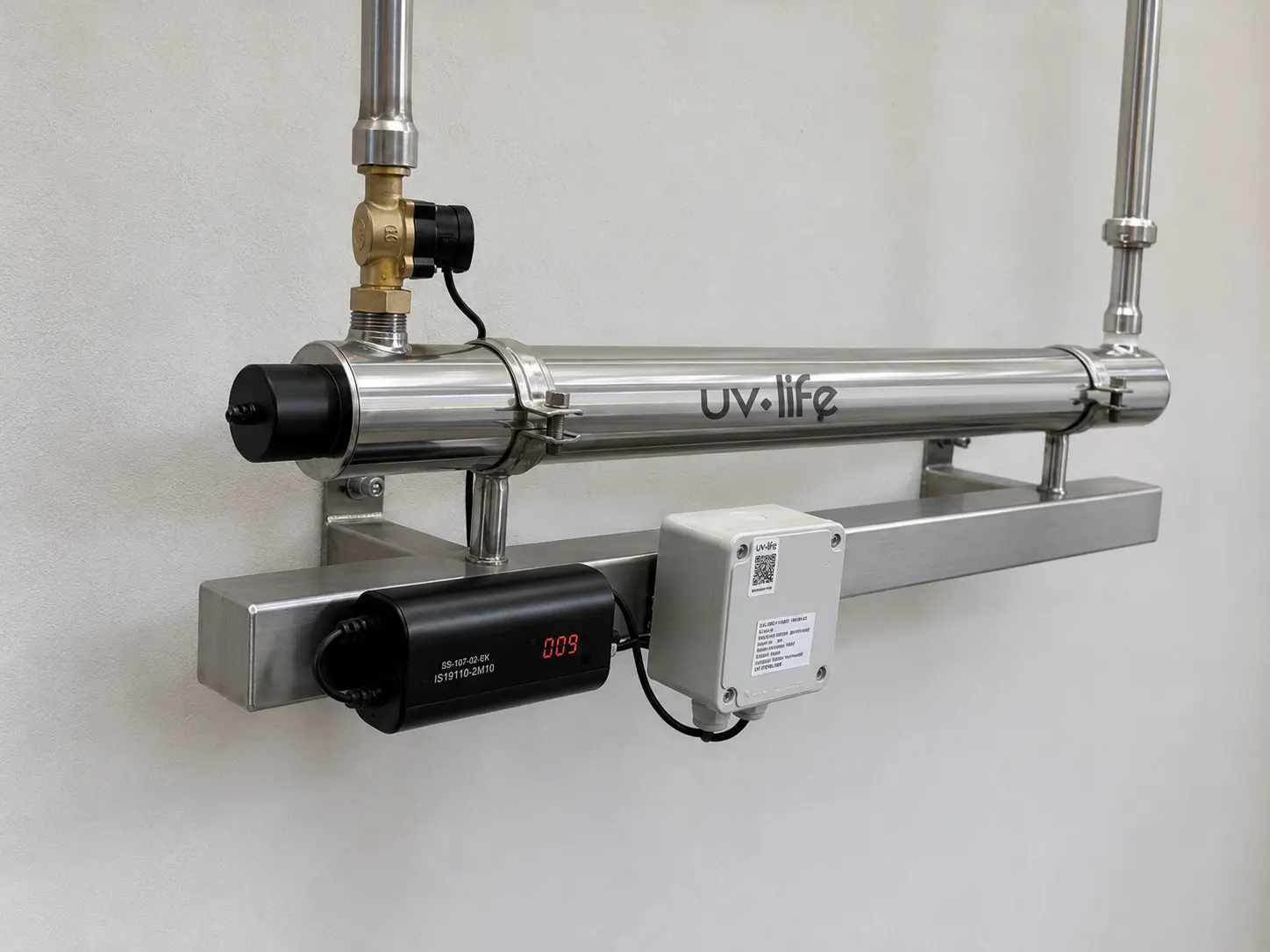
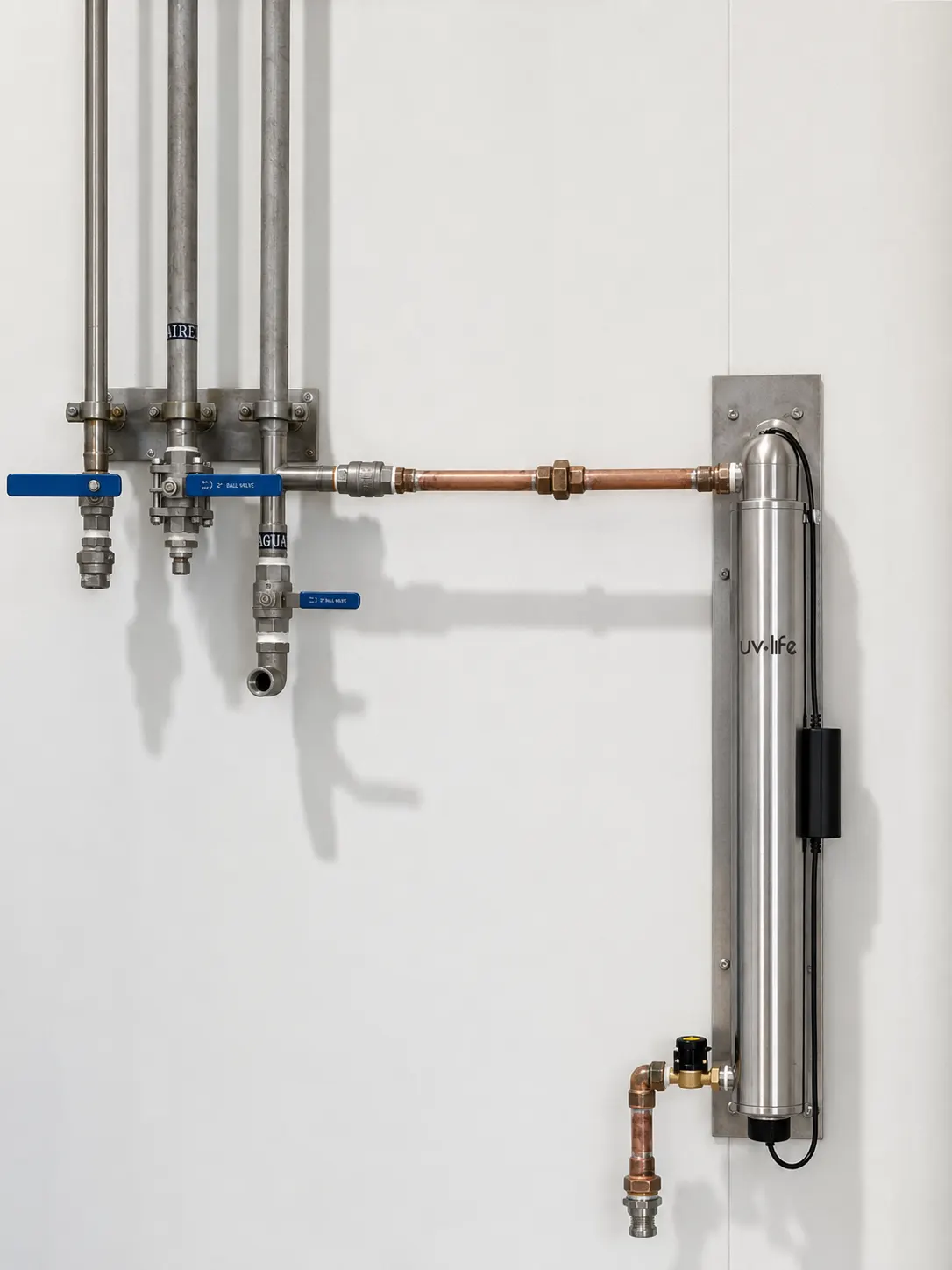
They wanted to secure the microbiological quality of their water without adding more chemicals or affecting taste. They installed two inline UV-C reactors, sized to their flow rate, as a disinfection step inside their water system.
"We wanted an additional barrier to protect the quality of our water without adding chemicals. With UV-Life's UV-C light we reinforced the microbiological safety of the water without changing its taste or odor."
2.3 m³ UV-C Reactor
A germicidal ultraviolet reactor for inline water disinfection, sized to your flow rate. It installs on existing piping in food plants, beverage lines, laboratories and building water systems.
2.3 m³ UV-C Reactor
Stainless steel chamber with a 40 W UV-C lamp and quartz sleeve for continuous disinfection of process water. Electronic ballast with flow sensor and lamp-failure alarm.
- Maximum flow rate 10 GPM (2.3 m³/h)
- 40 W UV-C lamp · 254 nm
- Stainless steel chamber · 3/4" male connection
- Dimensions 890 × 63.5 mm (35 × 2.5 in) · max pressure 8 bar (116 psi)
- Generates no ozone · no chemicals, no residue
- 10,000 hour rated life · flow sensor and alarm
- FCC · CE · SGS · CESMEC certified
- Installation manual (PDF)
Reactors from 6 GPM to 350 GPM (1.3–80 m³/h)
What plant, QA and water system managers ask us
What is the UV chamber of a water disinfection reactor?
It is the stainless steel body the water flows through while it receives the germicidal radiation. The lamp sits inside the chamber, protected by a quartz sleeve that separates it from the water without blocking the light. The geometry of the chamber sets how long each drop stays exposed and therefore the effective dose. The UV-Life reactor uses a welded stainless steel chamber, validated at 1.04 MPa (151 psi) of water pressure over 100,000 cycles, and treats up to 10 GPM (2.3 m³/h).
How do you size a UV chamber for your flow rate?
The dose the water receives is irradiance multiplied by residence time inside the chamber. The higher the flow rate, the shorter the exposure and the lower the dose. That is why a reactor is picked on the real peak flow of the line, not the average: if flow exceeds the rated capacity of the chamber, the dose drops and disinfection stops being reliable. UV transmittance at 254 nm and fouling of the quartz sleeve also matter, which is why the sleeve needs periodic cleaning.
Does the UV chamber need maintenance?
Yes, and it is simple. The quartz sleeve around the lamp collects mineral and biological deposits that cut the light reaching the water; you clean it based on water hardness and load. The lamp gets replaced at the end of its rated life even while it is still lit, because it loses irradiance before it goes dark. The stainless steel chamber itself is not a consumable.
Does UV-C replace chlorine in water treatment?
UV-C is primary disinfection: it inactivates bacteria, viruses and protozoa without adding chemicals and without creating byproducts. In many processes it replaces or sharply reduces chlorination. Where a chlorine residual is required in the loop, UV-C acts as the main barrier and chlorine only maintains that minimum residual.
Does UV-C inactivate Cryptosporidium and Giardia?
Yes. UV-C is especially effective against Cryptosporidium and Giardia, protozoa that survive chlorination at normal doses. The light damages their DNA or RNA and stops them from reproducing and infecting.
Does UV disinfection change the taste, odor or color of water?
No. UV-C adds nothing to the water and creates no byproducts. It does not change taste, odor, color or pH; it only inactivates the microorganisms that pass through the reactor.
What water quality does a UV system need to work properly?
Clear water: turbidity below 1 NTU and UV transmittance above 75%. That is why it is installed after filtration. Suspended solids, iron or high hardness shade the microorganisms from the light and have to be treated upstream of the UV reactor.
Does UV-C leave a residual in the loop the way chlorine does?
No. It disinfects the water at the point where it is installed, but it leaves no residual downstream. That is why point-of-use water disinfection works best as close as possible to the point of use or the filling line; if you need a residual in the loop, pair it with a minimum chlorine dose.
Do I have to shut the plant down to install a UV reactor?
In most cases, no. UV-C reactors install inline on existing piping, sized to the flow rate, and the work is scheduled into a maintenance window without rebuilding the whole water system.
Need to disinfect your water without adding chemicals?
Tell us your flow rate and how the water is used (food processing, beverage lines, laboratories, building systems). Free technical assessment.